February 26, 2026 | Global Markets
⚡ US–Iran talks begin today. Markets are on edge
Global markets are treading carefully on Thursday as traders navigate the collision of geopolitics and monetary policy across a wide range of assets. Bitcoin has pulled back sharply after briefly touching a one-week high, reinforcing what analysts describe as a deepening lock-step between cryptocurrencies and high-growth technology stocks. Meanwhile, crude oil is holding a clear geopolitical risk premium heading into a critical third round of nuclear negotiations between Washington and Tehran, and gold remains well above the $5,100-per-ounce mark as investors continue to pay up for protection against escalation.
Crypto and Tech: A Tightening Relationship
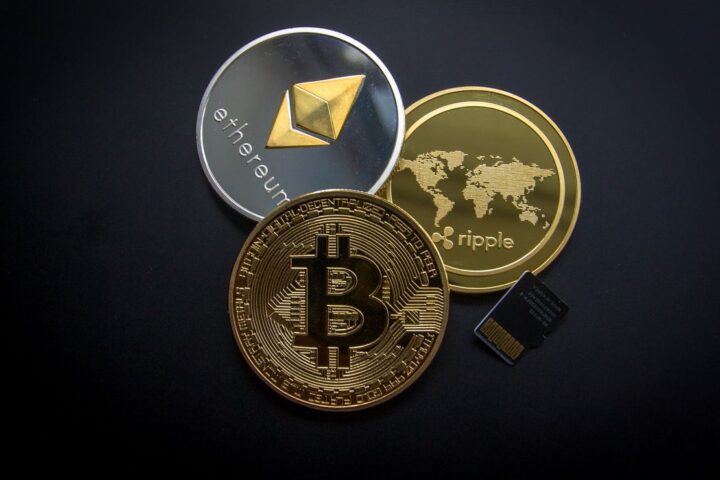
Bitcoin slipped 1.5% to $67,904 in early trade on Thursday after briefly touching $69,847 the prior session — its highest point in a week. The pullback was notable not just for its magnitude, but for what it signals about how digital assets are increasingly trading in tandem with risk-sensitive equities.
Mohit Kumar, economist at Jefferies, flagged the trend directly in a recent note. He pointed to the synchronized movement between cryptocurrencies and technology stocks, adding that investors should expect the relationship to hold. “We believe that the linkage between crypto and tech stocks will persist over the coming months,” Kumar wrote.
The implication for broader markets is significant. When sentiment shifts — whether triggered by policy news, geopolitical headlines, or macro data surprises — both crypto and high-growth tech names tend to move sharply in the same direction. Investors exposed to Nasdaq-style growth stocks may find that Bitcoin’s daily gyrations are an increasingly reliable leading indicator of risk appetite.
Oil: A $10 Premium Riding on Iran Talks
Crude prices edged higher in early European trade, with Brent crude up 0.3% to $70.94 per barrel and West Texas Intermediate rising a similar amount to $65.35 per barrel. The modest gains reflect a market content to hold its current position rather than make aggressive bets ahead of a consequential afternoon.
Later Thursday, US and Iranian negotiators are set to meet for a third round of nuclear discussions — talks that energy markets are watching closely for any signal on the future of Iranian oil supply. Analysts at ING estimate that as much as $10 per barrel of the current price reflects tension-related risk premium, a buffer the market has steadily built in as diplomacy remained uncertain.
The path forward diverges sharply depending on the outcome. A productive session that moves negotiations toward resolution could see crude gradually shed that premium, providing relief for energy-importing economies — including much of Asia and Europe — where elevated fuel costs are feeding through to inflation and corporate margins. A breakdown, on the other hand, would sustain upside pressure on prices, though ING noted that traders may wait to see the scale of any potential US response against Iran before fully repricing the risk.
Adding a supply-side complication to the mix, the latest weekly report from the US Energy Information Administration showed domestic crude inventories jumping by 16 million barrels — the largest single-week build since February 2023. The data point suggests either a softening in near-term demand or a shift in trade flows, and it provides a counterweight to the geopolitical bid currently supporting prices.
Gold: Above $5,100 and Acting as a Portfolio Shield
Gold remains a standout performer over the past week, having climbed more than 3.5% even as intraday volatility keeps traders cautious. New York futures pulled back 0.7% in early trade to $5,191.60 per ounce, a modest retreat after a strong run-up driven by two converging forces: uncertainty over US trade policy and the persistent risk of escalation involving Iran.
Analysts at ING argued that gold’s structural tailwinds remain intact regardless of short-term fluctuations. Any deterioration in the diplomatic track with Tehran, they said, would likely push bullion higher and reinforce its role as a hedge against macro and geopolitical shocks. The rate outlook is also adding nuance — with some market participants now pricing in a scenario where the Federal Reserve holds rates steady for longer than expected, the opportunity cost of holding non-yielding gold stays relatively contained, keeping demand firm.
The broader takeaway from gold’s performance is the signal it sends about overall investor posture. When equities and safe-haven metals both hold elevated levels simultaneously, it suggests a market that is cautiously constructive — willing to hold risk assets, but also actively buying insurance against a policy accident or geopolitical flare-up that could disrupt both growth and stability.
The Bigger Picture
Taken together, Thursday’s market moves tell a coherent story. Crypto and tech are behaving as a unified risk complex, oil is priced for tension that may or may not be resolved, and gold is being used as a hedge by investors who are not yet ready to abandon equities but want protection if conditions deteriorate.
The US–Iran nuclear talks later in the day are the most immediate catalyst to watch. A constructive outcome could lift risk sentiment, ease commodity-driven inflation pressures, and potentially give central banks — including the Federal Reserve — slightly more room to maneuver on rates. A breakdown would likely have the opposite effect, tightening financial conditions at a moment when global growth is already navigating headwinds from trade policy uncertainty and elevated borrowing costs.
Sources: Dow Jones Newswires, ING Research, Jefferies, US Energy Information Administration. This article is for informational purposes only and does not constitute investment advice.