Live · Updated: Wednesday, April 15, 2026 | 10:00 AM IST
Global Trade | Central Banks | Crypto | Markets
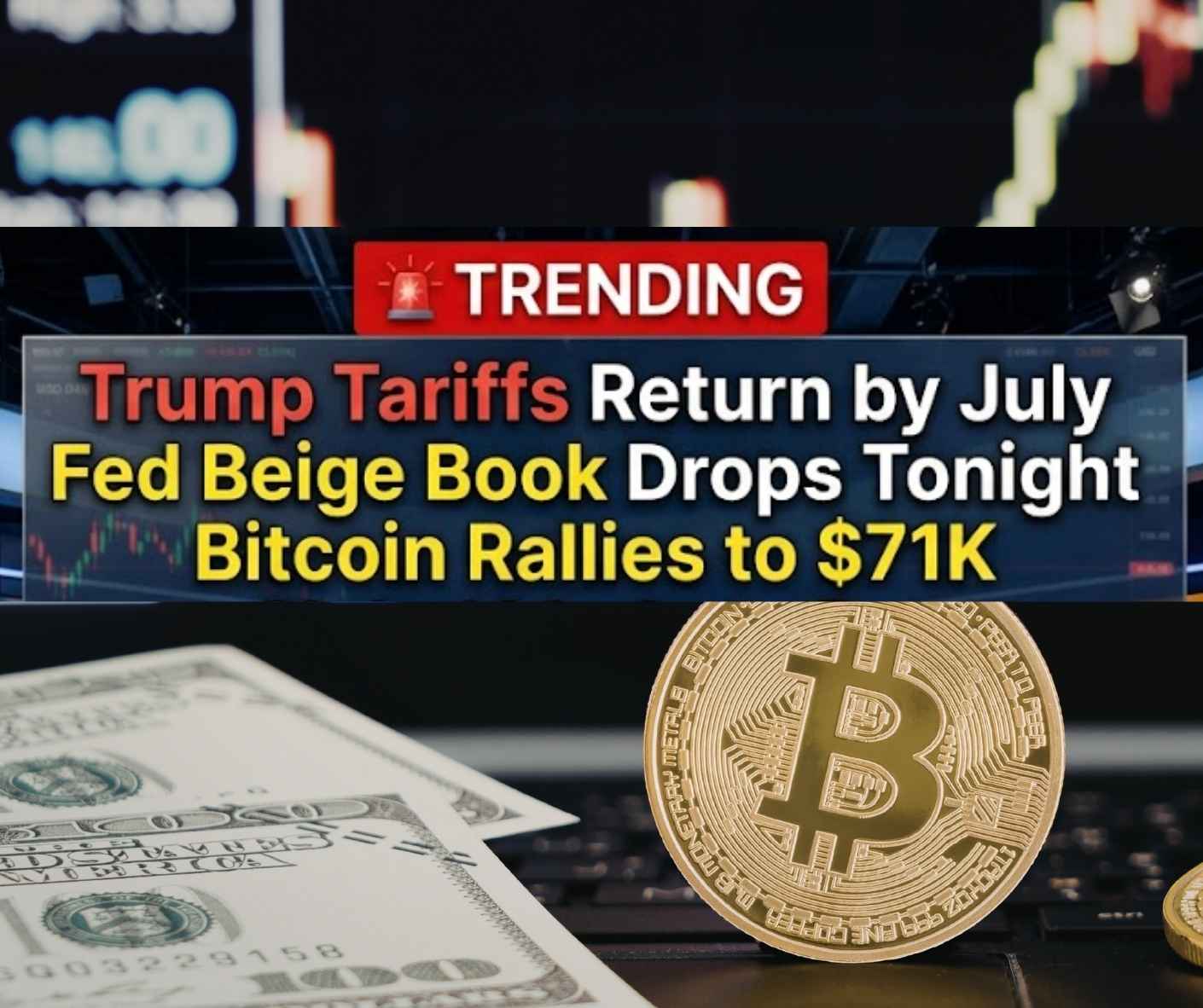
BREAKING: Trump Tariffs Are Coming Back Bessent Confirms July Deadline
The trade war is officially back on the table. U.S. Treasury Secretary Scott Bessent announced this morning that Section 301 studies are now underway to restore President Trump’s previous tariff levels by early July, marking a decisive shift in Washington’s trade policy following a Supreme Court setback.
Bessent’s statement came as European leaders in Brussels began emergency discussions on coordinated retaliatory measures, signaling that a full-scale transatlantic trade conflict could be on the horizon. The EU is preparing a unified response should the U.S. proceed with restoring higher tariff walls.
Court Battle Over Section 122 Tariffs Heats Up
Meanwhile, a specialized federal court is hearing arguments against Trump’s temporary 10% Section 122 global tariffs. The legal challenge represents one of the most significant tests of the administration’s trade authority. Businesses across manufacturing, agriculture, and consumer goods sectors are watching closely, as any ruling could reshape import costs for thousands of products.
Bessent also revised his economic outlook dramatically, stating that U.S. GDP growth could easily exceed 3.5% this year despite geopolitical headwinds. The comment signals confidence in domestic resilience even as trade tensions escalate.
Fed Beige Book Drops Tonight — Regional Price Pressures in Focus
Wall Street is bracing for one of the Fed’s most closely watched releases. The Federal Reserve Beige Book publishes tonight, offering anecdotal evidence on economic conditions across all 12 Federal Reserve districts.
The key focus is regional price pressures. After weeks of Middle East-driven energy volatility, Fed officials have signaled that their rate cut path in 2026 now depends more heavily on incoming inflation, energy, and labor data. A single rate cut this year is expected, but only if energy prices stabilize and wage growth cools.
FOMC minutes released earlier highlighted that prolonged conflict in the Middle East could lead to more persistent energy price increases, directly impacting core inflation. The Fed is now in a holding pattern, waiting for data to guide its next move.
Bond Market Reacts: 10-Year Treasury Yield Dips
The 10-year Treasury yield dropped slightly as investors positioned ahead of the Beige Book release. The marginal decline reflects caution, as markets are pricing in uncertainty around both inflation and the Fed’s response. The US Dollar Index (DXY) saw minor gains, showing that currency traders are also bracing for the report’s impact.
Bitcoin Rallies to Mid-$70,000s — Coinbase Shares Surge 6.9%
Crypto markets are back in risk-on territory. Bitcoin has rebounded to the mid-$70,000 range, holding above $71,000 even as total crypto market cap dipped 2.89% over the 24-hour snapshot.
Coinbase shares rallied 6.9% in sympathy with the broader crypto move, a strong signal that institutional appetite for digital assets remains intact. Adding to the positive momentum, Coinbase received conditional approval for a federally chartered trust structure, expanding its custody services and strengthening its regulatory positioning with the OCC.
New Crypto Regulation Framework Emerges in Congress
US lawmakers have introduced draft legislation for a comprehensive digital asset regulatory framework targeting stablecoins and exchanges. The bill aims to provide clear guidelines for stablecoin issuance and increase oversight of major crypto platforms, a move that could bring much-needed clarity to the industry.
Separately, the Concodium (CCD) network announced a strategic partnership with a major Asian tech firm for supply chain integration, signaling continued blockchain adoption beyond speculative trading.
S&P 500 Futures Point Higher — Tech Leads the Recovery
After days of geopolitical-driven volatility, S&P 500 futures are pointing higher as Wall Street looks to recover. The modest rebound is being led by large-cap technology stocks, with Alphabet (Google) up 3.25% and NVIDIA climbing 2.82% as AI enthusiasm continues to fuel the semiconductor sector.
Large-cap tech stocks continue to drive S&P 500 performance, disproportionately outweighing the equal-weighted index. This concentration risk remains a key concern for strategists, as the market’s health is increasingly tied to a handful of mega-cap names.
Citigroup and Johnson & Johnson both reported Q1 earnings that exceeded analyst expectations, lifting financial and healthcare sectors across the board.
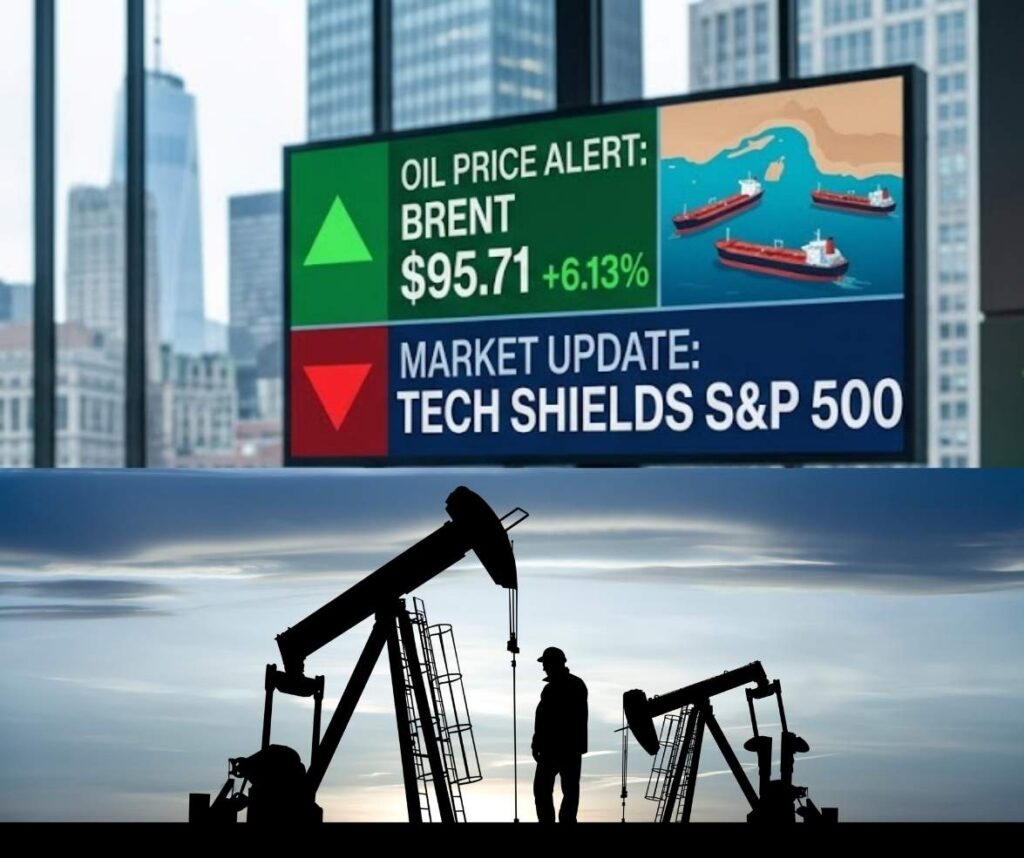
Oil Retreats Below $90 — Brent Crude Slips on Peace Talk Reports
In a notable reversal from last week’s $104 peak, Brent crude slipped below $90 as reports of progress in Middle East peace talks emerged alongside continued U.S. Hormuz blockade operations. The pullback suggests traders are beginning to price in a potential diplomatic resolution.
US crude oil production levels also saw a minor decline amid maintenance shutdowns, providing marginal support to prices. The energy sector remains a top recommendation from major investment banks, with one large firm issuing an overweight stance on energy stocks citing the persistent geopolitical premium.
Gold Holds Near $2,350 — Safe-Haven Demand Persists
Gold prices stabilized after their recent surge, trading near $2,350 per ounce. The safe-haven metal maintains elevated levels as geopolitical concerns and inflation fears continue to support demand.
Industrial Metals Surge — Copper Leads on Chinese Demand
Copper and other industrial metal prices jumped sharply on renewed Chinese demand data. Better-than-expected industrial output and consumption figures from Beijing sent commodity traders rushing back into base metals, a sign that the world’s second-largest economy may be stabilizing faster than anticipated.
European Stagflation Fears Mount After Weak PMI Data
European fund managers are expressing growing caution after softer-than-expected Purchasing Managers’ Index (PMI) data across the eurozone. The stagflationary risk, which means slow growth paired with persistent inflation, is now a mainstream concern among institutional investors.
The European Central Bank (ECB) is widely expected to hold rates steady at 2.15% at its late April meeting, mirroring the Fed’s cautious stance.
Emerging Markets Outperform — EM Equities Buck the Trend
While US and European markets navigate volatility, emerging market equities continue to outperform in April. EM indices finished in positive territory, reflecting investor rotation toward higher-growth, lower-valuation markets as developed economy uncertainty persists.