New Delhi:
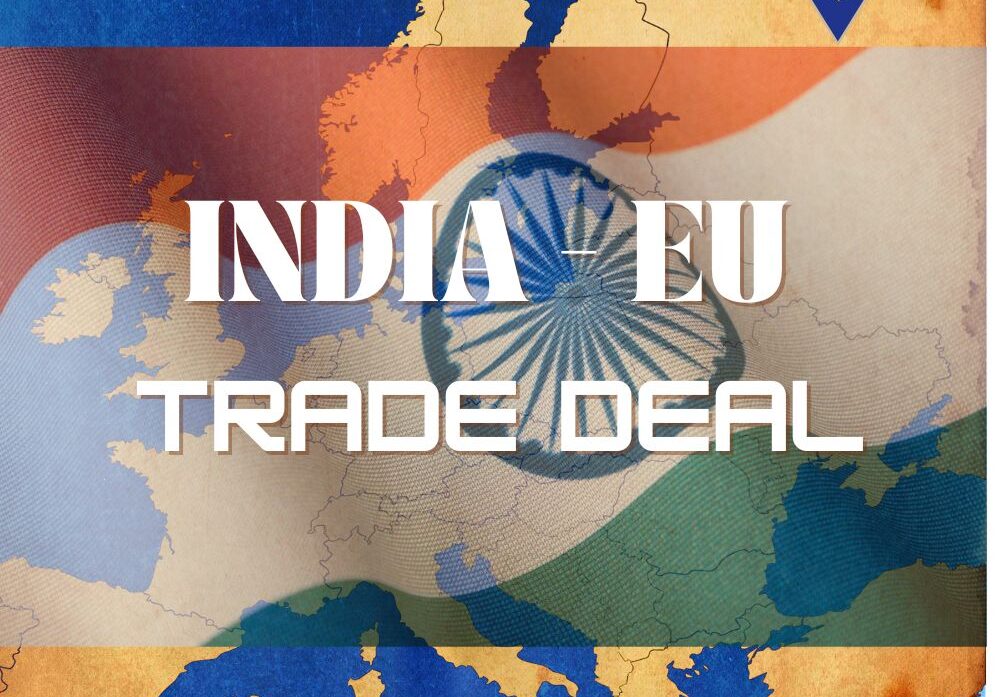
India and the European Union have formally signed the India-EU Free Trade Agreement 2026, marking one of the most significant global trade developments in recent years. Announced at the India-EU Summit 2026 in New Delhi, Prime Minister Narendra Modi described the agreement as the “mother of all trade deals,” citing its scale, ambition, and long-term economic impact.
The agreement brings together two major economic powers representing nearly 25 percent of global GDP and close to one-third of world trade, creating a unified trade corridor connecting almost two billion people. At a time when global trade faces fragmentation and geopolitical strain, the India-EU Free Trade Agreement 2026 signals a decisive move toward economic cooperation and stability.
What the India-EU Free Trade Agreement 2026 Covers
Under the India-EU Free Trade Agreement 2026, India has committed to reducing or eliminating tariffs on over 90 percent of EU-origin goods, with phased implementation timelines across sectors. In select categories, tariff liberalisation is expected to reach 96.6 percent, making it one of India’s most comprehensive trade agreements to date.
Key European exports expected to benefit include automobiles, industrial machinery, chemicals, pharmaceuticals, and clean energy equipment. Import duties on European cars, previously exceeding 100 percent in some cases, will be reduced significantly over time.
For Indian exporters, the India-EU FTA opens expanded access to European markets for textiles, engineering goods, pharmaceuticals, IT services, and professional services, strengthening India’s role in global value chains.
India-EU Summit 2026: Trade, Technology, and Strategy
The India-EU Summit 2026 extended beyond trade discussions. Leaders from both sides agreed to deepen cooperation in technology, defence, digital infrastructure, supply-chain resilience, and clean energy.
European Commission President Ursula von der Leyen emphasised that the India-EU Free Trade Agreement 2026 creates a predictable, transparent, and rules-based trade environment. European Council President António Costa highlighted the agreement’s role in strengthening long-term economic and strategic ties between India and Europe.
According to official data from the European Commission, the EU is already India’s largest trading partner, with bilateral trade in goods reaching €120 billion in 2024, alongside substantial foreign direct investment inflows.
Authoritative source:
https://policy.trade.ec.europa.eu/eu-trade-relationships-country-and-region/countries-and-regions/india_en
Why the India-EU Trade Deal Matters Globally
The India-EU trade deal has drawn significant international attention, particularly as major economies reassess supply chains amid rising protectionism. Analysts view the agreement as a strategic response to global uncertainty, enabling diversification of trade partnerships and reducing dependence on limited markets.
Trade between India and the EU has grown nearly 90 percent over the past decade, and the India-EU Free Trade Agreement 2026 is expected to accelerate this trajectory. More than 6,000 European companies currently operate in India, and the deal is likely to attract fresh investments in manufacturing, renewable energy, advanced technology, and services.
Investment, Services, and Manufacturing Impact
Beyond goods, the India-EU Free Trade Agreement 2026 places strong emphasis on services liberalisation and investment facilitation. Sectors such as financial services, telecom, logistics, IT, and professional services are expected to benefit from clearer regulatory frameworks and improved market access.
For India, the agreement aligns with national priorities including Make in India, Digital India, and industrial expansion. For the EU, it secures deeper access to one of the world’s fastest-growing major economies.
What Happens Next After the FTA Signing
While the India-EU Free Trade Agreement 2026 has been signed, implementation will follow a phased roadmap. Tariff reductions, regulatory harmonisation, and sector-specific commitments will roll out gradually following ratification procedures on both sides.
Parallel negotiations on investment protection and geographical indications are expected to progress alongside the core agreement.
As global trade patterns continue to evolve, the India-EU Free Trade Agreement 2026 stands as a defining milestone, reshaping economic ties between Asia and Europe for decades to come.
FAQs (AEO Optimised)
What is the India-EU Free Trade Agreement 2026?
It is a comprehensive trade pact between India and the European Union aimed at reducing tariffs, improving market access, and boosting investment.
Why is PM Modi calling it the mother of all trade deals?
Because of its scale, covering a quarter of global GDP and transforming trade across goods, services, and strategic sectors.
When will the agreement take effect?
Implementation will begin in phases following ratification and regulatory alignment.
Which sectors benefit the most?
Manufacturing, automobiles, pharmaceuticals, clean energy, technology, and services.
Follow DF Media for more global trade, startup, investment, and economic ecosystem insights.