Japan’s bond market delivered a clear message to global investors on Friday. The era of ultra-easy money is ending, and markets are ready for it.
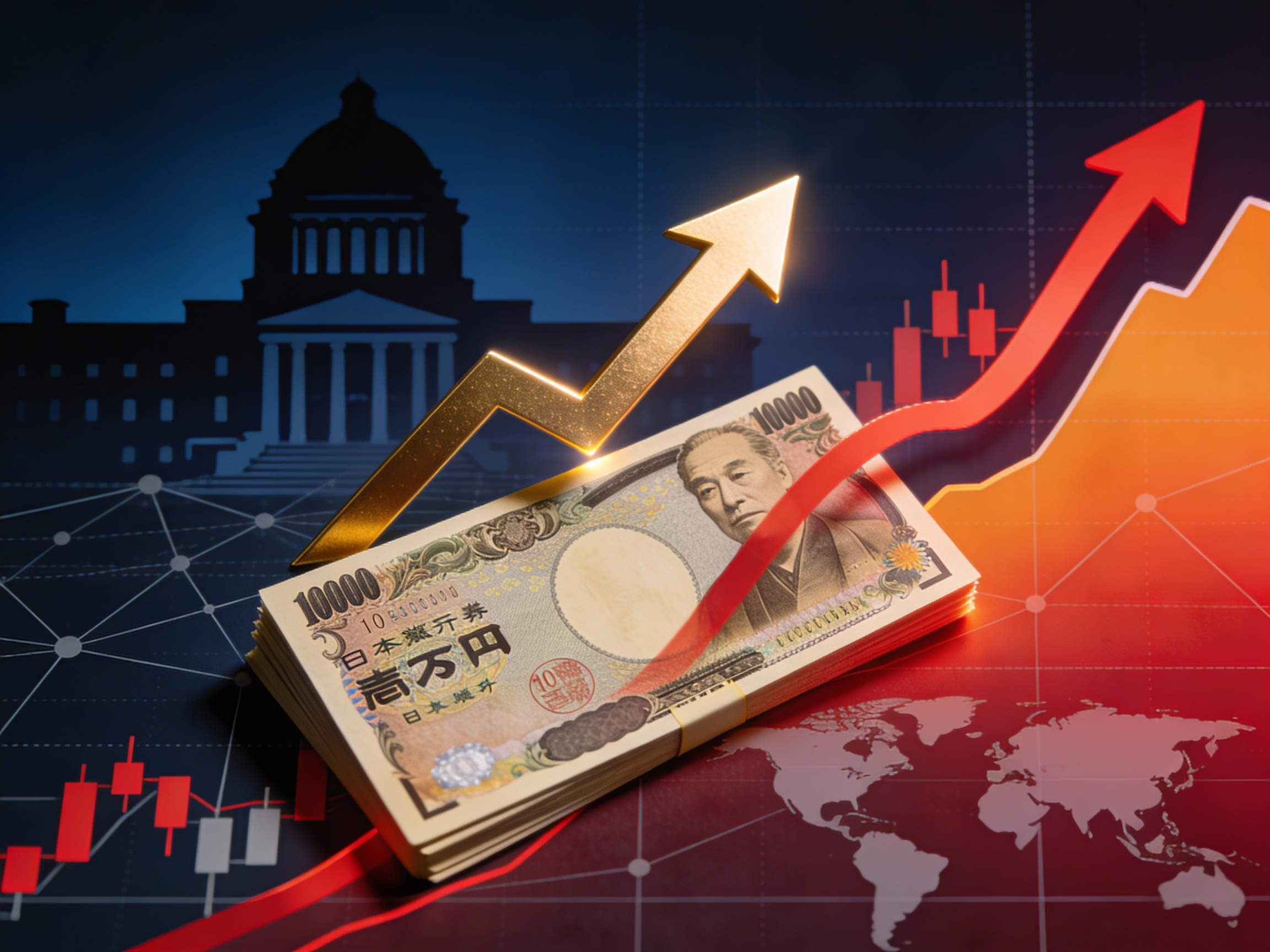
After the Bank of Japan raised interest rates to their highest level in three decades, Japanese government bond yields surged, the yen weakened, and global markets responded not with panic, but with measured optimism. Wall Street futures pointed higher, European markets stayed steady, and Asian equities closed firmly in positive territory.
This was not just a Japan story. It was a global turning point.
A Historic Shift in Japanese Monetary Policy
The Bank of Japan raised its short-term policy rate to 0.75 percent, marking another step away from decades of aggressive monetary stimulus. Japan’s 10-year government bond yield climbed to a 26-year high, reflecting investor expectations that further tightening lies ahead.
For years, Japan stood apart from the rest of the world, holding rates near zero while the United States and Europe tightened policy to fight inflation. That divergence shaped global capital flows, supported risk assets, and fueled carry trades funded in yen.
Friday’s move confirms that Japan is no longer an outlier.
Despite the rate hike, the yen weakened sharply, falling to around 157 per dollar. That reaction signals that investors believe Japan’s tightening cycle is still in its early stages and that fiscal stimulus from Tokyo could continue to pressure the currency in the near term.
Japanese equities took the news in stride. The Nikkei index closed up about 1 percent, suggesting investors see the policy shift as a sign of economic normalization rather than a threat to growth.
Wall Street Looks Ahead, Not Back
In the United States, the response was constructive. Wall Street futures pointed to gains of up to 0.3 percent following a strong tech-led rally the previous session. Semiconductor stocks, boosted by standout results from Micron Technology, helped reinforce confidence that corporate earnings momentum remains intact.
Investors were also digesting fresh inflation data showing U.S. consumer prices rising at a slower pace. Headline inflation cooled to 2.7 percent, easing pressure on the Federal Reserve even as officials remain cautious about declaring victory.
Bond markets reflected that balance. The yield on the 10-year U.S. Treasury hovered near 4.15 percent, below recent highs, while expectations for a near-term rate cut remained limited. Markets are pricing patience, not urgency.
The takeaway is clear. Global markets are absorbing tighter financial conditions without losing confidence in growth.
Europe Holds the Line
Across Europe, policymakers struck a firm but controlled tone.
The European Central Bank held interest rates steady and signaled that the easing cycle may be nearing its end. Markets now see little chance of meaningful rate cuts in 2026, reinforcing the ECB’s message that inflation risks remain a priority.
In the United Kingdom, the Bank of England cut rates, but only by a narrow margin following a close vote. Officials emphasized caution about future easing, pushing expectations for another cut further into the year.
European equities were modestly lower, with the STOXX 600 slipping slightly, but volatility remained muted. Investors appeared more focused on policy clarity than short-term market moves.
Meanwhile, European Union leaders agreed to provide Ukraine with 90 billion euros in support over the next two years. While plans to use frozen Russian assets stalled, the deal underscored Europe’s willingness to coordinate fiscal policy during a period of geopolitical uncertainty.
Commodities Reflect a Balanced Market
Commodity markets added another layer to the global picture.
Oil prices edged higher as traders assessed the risk of supply disruptions linked to Venezuela, following comments from U.S. President Donald Trump that left the possibility of conflict on the table. Brent crude rose to around 60 dollars a barrel, while U.S. crude traded near 56 dollars.
Gold slipped slightly to about 4,322 dollars an ounce, remaining below its recent peak but still elevated by historical standards. The move suggests reduced demand for immediate safe-haven protection rather than a loss of confidence in the metal’s long-term role.
Why This Moment Matters
The significance of the Bank of Japan’s decision extends far beyond Tokyo.
Japan has been the final anchor of ultra-loose monetary policy in the global system. As that anchor lifts, global markets must adjust to a world where liquidity is no longer unlimited and capital carries a clearer price.
So far, that adjustment has been orderly.
Stocks are holding gains. Bond yields are rising without spiking. Currencies are recalibrating, not collapsing. This is what a healthy transition looks like.
Analysts expect the Bank of Japan to continue tightening gradually, with some forecasting rates could reach 1.75 percent by 2027. The challenge for policymakers will be managing inflation without derailing growth, especially as Japan’s government prepares additional fiscal stimulus.
The Bigger Picture
What markets are signaling today is confidence. Confidence that global growth can continue without emergency support. Confidence that policymakers are moving carefully rather than abruptly. Confidence that the post-pandemic era of extraordinary measures is giving way to something more sustainable.
Japan’s bond yields may have jumped, but global markets did not flinch.
That calm response may be the most important signal of all.
FAQS
1.Why did Japan bond yields jump today?
Japan bond yields jumped after the Bank of Japan raised interest rates to their highest level in 30 years, signaling further tightening ahead.
2.How did global markets react to the BOJ rate hike?
Global markets remained stable. U.S. futures rose, European stocks were steady, and Asian equities gained, showing confidence rather than concern.
3.Did the yen strengthen after the BOJ hike?
No. The yen weakened as investors priced in expectations of additional rate increases and continued fiscal stimulus.
Global markets just crossed a meaningful line.
Japan’s bond yields jumped after the Bank of Japan raised rates to a three-decade high, signaling a shift that goes far beyond Tokyo. For years, Japan anchored the world’s ultra-easy money era. That chapter is now closing.
What’s notable is how markets reacted.
US futures stayed firm.
European equities held steady.
Risk assets adjusted without panic.
That’s not turbulence. That’s confidence.
Central banks are reasserting credibility, and markets are rewarding clarity over caution. Capital is being repriced, not withdrawn. This is what a healthier global financial system actually looks like.
For investors, operators, and policy leaders, the takeaway is clear: the era of emergency support is fading, and fundamentals are back in charge.
The global money map is changing. Those who adapt early will lead the next cycle.
👉 Stay ahead of global markets, gold prices, central bank policy, and breaking finance news. Daily Finance