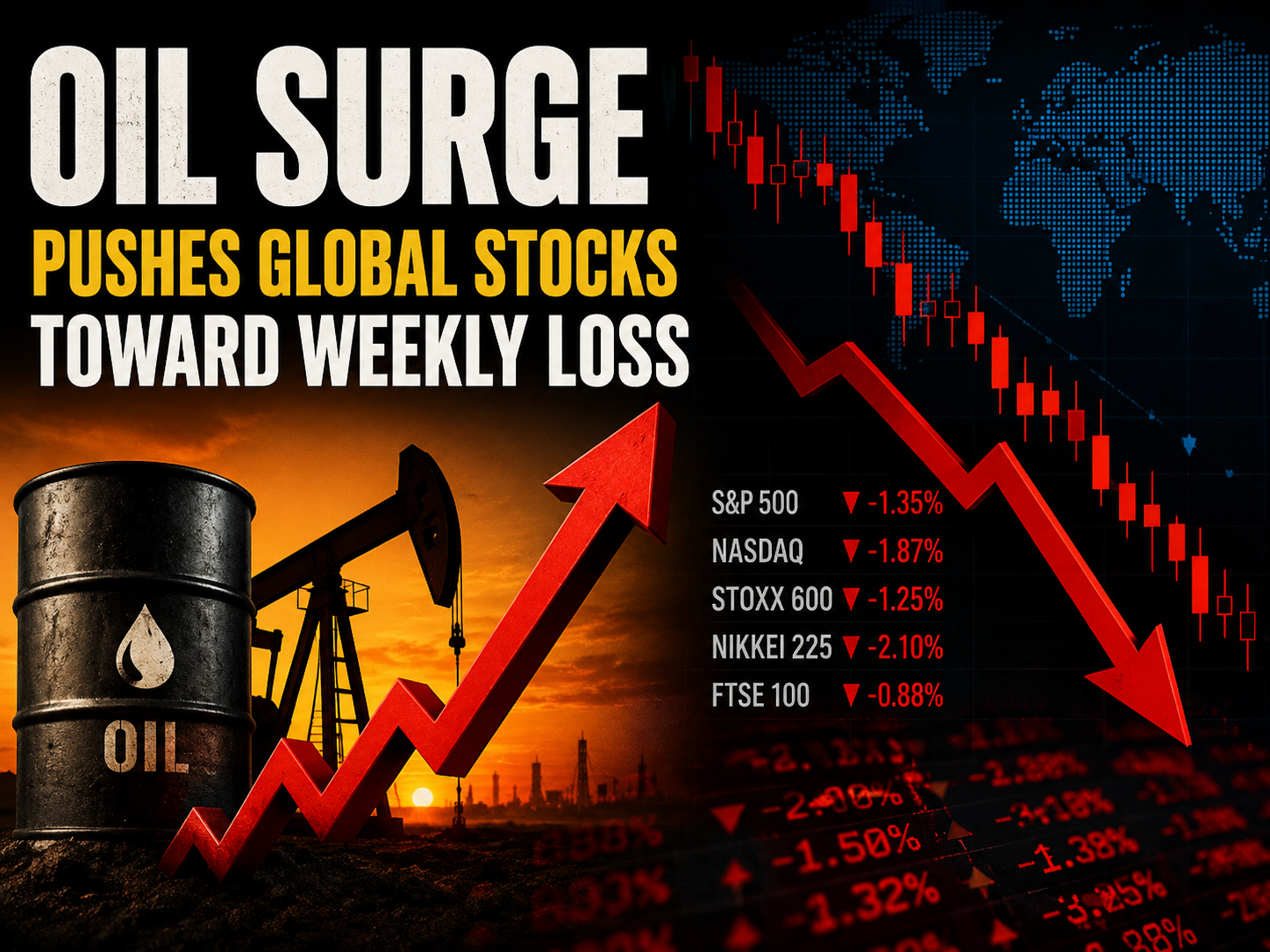
Markets are ending the week the way they started it: nervous about oil, nervous about rates, and increasingly nervous about how much Big Tech is spending on AI with little to show for it yet.
World stocks are on track for a second straight weekly decline, and long-dated bond yields are sitting at levels not seen in decades. The common thread running through nearly every market move this week traces back to one thing: a nearly 40% surge in oil prices this month as the conflict in the Middle East escalates.
Oil Is the Real Story
Brent crude spiked 7% overnight Thursday to a two-month high of $102 a barrel before easing back 2% to settle near $98.70 on Friday. The swing followed Houthi attacks on Saudi tankers in the Red Sea, a second major chokepoint now at risk alongside Iran’s near-closure of the Strait of Hormuz.
President Trump raised the stakes further, vowing “major military punishment” for Iran and the Houthis. The U.S. military struck Iran late Thursday into early Friday, the 13th straight night of attacks. Every fresh escalation is pushing energy prices higher, and higher energy prices are exactly what central banks don’t want to see right now.
Shaniel Ramjee, co-head of multi-asset investment at Pictet Asset Management, pointed to how directly this is now feeding into currency and asset pricing, noting that days of sustained higher oil have finally started rippling across other markets rather than staying contained to energy alone.
Bond Yields Are Sending a Message
The clearest sign of how seriously investors are taking the inflation risk is in the bond market. The 10-year U.S. Treasury yield touched an 18-month high of 4.7135%, climbing nearly 16 basis points in a single week. The 30-year yield held near 5.176%, within striking distance of a 19-year peak.
It’s not just a U.S. story. German 10-year Bund yields, the benchmark for the eurozone, are hovering close to their highest level since 2011. When yields rise this fast across multiple economies at once, it usually means one thing: traders are pricing in stickier inflation and a longer wait for rate cuts, possibly even the opposite.
The Dollar Wins, the Yen Loses
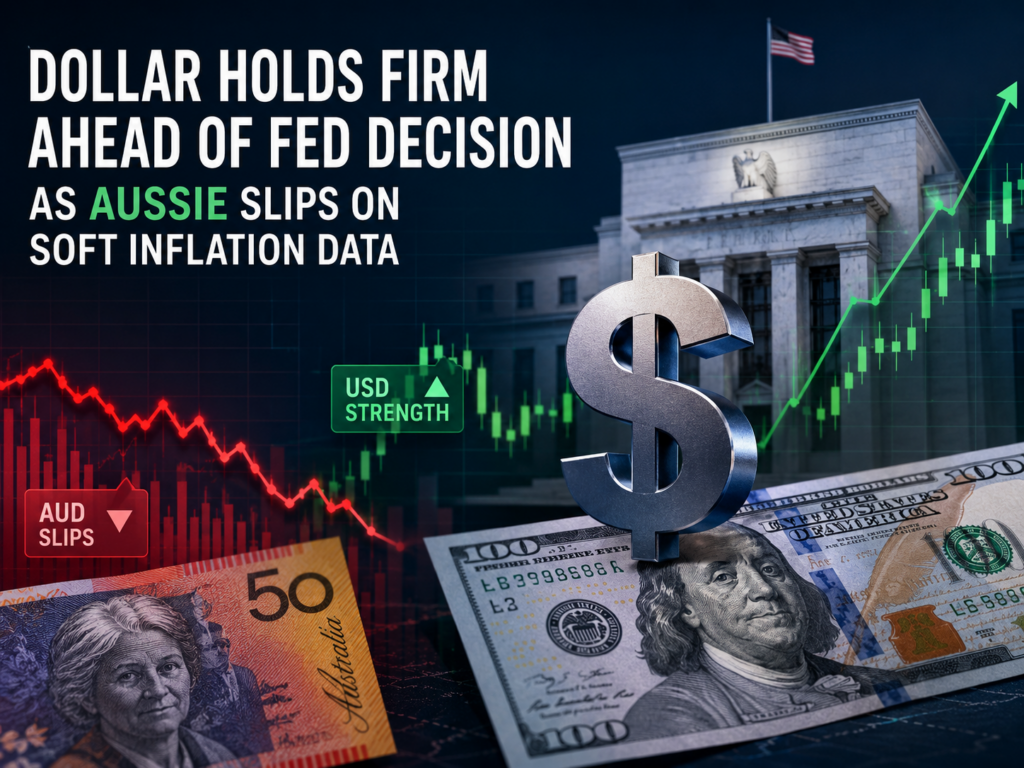
Higher yields have been rocket fuel for the U.S. dollar. The dollar index climbed to 101.4, on pace for its biggest weekly gain in roughly a month, after touching its highest level of the month on Thursday.
The yen is bearing the brunt of it. It’s pinned near a 40-year low of 163.79 per dollar, weak enough that the U.S. Treasury issued a warning about excessive currency volatility. Japan’s finance minister has repeated verbal warnings about possible intervention, a page from the same playbook used in April and May when Japan actually stepped in to buy yen. It didn’t work then either. The currency has since pushed well past the 160 level that traders once considered the line in the sand.
Equities: A Split Screen From New York to Seoul
The MSCI All-World Index slipped 0.3%, putting it on track for a second consecutive weekly loss. Europe’s STOXX 600 actually rose 0.4% on Friday, a small bounce after dropping more than 1% the session before, though the region is still headed for a weekly decline overall.
Asia took the harder hit. The MSCI Asia-Pacific index excluding Japan dropped 2.5%. Japan’s Nikkei fell 2.7%. South Korea’s KOSPI was the standout casualty, tumbling 5.7% and marking its fifth straight week in the red. Hong Kong’s Hang Seng slipped 1.7%.
Nasdaq futures dipped a modest 0.1%, but that number hides a more interesting split underneath it: Intel jumped more than 4% on strong earnings even as the broader tech sector stayed under pressure.
AI Spending Anxiety Hits Big Tech
That tension came to a head this week as Alphabet and Tesla, the first two of the so-called Magnificent Seven to report earnings this season, spooked investors by burning through significant cash on AI infrastructure buildout without clear proof it’s paying off yet.
Ramjee framed the risk in simple terms: the more these companies plow into capital spending, the more sensitive their stock prices become to moves in interest rates, particularly real yields. In a week when yields are spiking, that’s not a comfortable position for the market’s largest, most AI-exposed names to be in.
Central Banks: The Odds Are Shifting
Traders are now pricing in roughly a one in three chance the Federal Reserve raises rates as soon as next week, a dramatic shift from just days ago when almost nobody was pricing that in. A September move is now considered more likely than not.
The European Central Bank held rates steady on Thursday, but a September hike is already about 70% priced in by markets. There was a small silver lining in the data: business activity surveys showed Germany’s private sector returned to growth in July for the first time in four months, and the pace of contraction in France’s private sector eased.
Gold and Silver Catch Their Breath
Precious metals had a quieter session after a rough Thursday. Gold held flat at $4,046 an ounce, stabilizing after a 2% drop the day before. Silver ticked up 0.7%, clawing back a small piece of Thursday’s 3.4% decline.
What to Watch Next
The next moves in oil will likely keep setting the tone. Any further escalation in the Middle East, particularly around the Strait of Hormuz or additional attacks near the Red Sea, could push crude back toward its recent highs and drag bond yields with it.
Also worth watching: whether the Fed’s tone next week validates the market’s new rate-hike pricing, and whether more Magnificent Seven earnings reports echo the same AI spending concerns that hit Alphabet and Tesla this week.
Key Takeaways
World stocks are headed for a second straight weekly loss as oil prices, up nearly 40% this month, stoke inflation fears. The 10-year Treasury yield hit an 18-month high, and the dollar is having its best week in about a month while the yen sits near 40-year lows. Asian markets took the hardest hit, led by a 5.7% weekly slide in South Korea’s KOSPI. Markets are now pricing a one in three chance of a Fed rate hike next week, a sharp shift from prior expectations. AI infrastructure spending by Alphabet and Tesla is adding a new layer of rate sensitivity to Big Tech stocks.
FAQ
Why are global stocks falling this week?
A near-40% rise in oil prices this month, driven by escalating conflict in the Middle East, has reignited inflation fears and pushed bond yields to multi-decade highs, weighing on stocks worldwide.
Why did oil prices spike and then pull back?
Brent crude surged 7% to a two-month high of $102 a barrel after Houthi attacks on Saudi tankers threatened a key Red Sea shipping route, then eased back to around $98.70 as the initial shock settled.
Is the Federal Reserve going to raise interest rates?
Markets are now pricing in roughly a one in three chance of a Fed rate hike as soon as next week, with a September increase considered more likely than not, a significant shift from expectations just a week earlier.
Why is the Japanese yen so weak right now?
The yen is trading near 163.79 per dollar, its weakest level in about 40 years, as rising U.S. Treasury yields boost the dollar. Japan has issued intervention warnings before but previous yen-buying efforts had limited lasting effect.
Why are Alphabet and Tesla’s earnings affecting the broader market?
Both companies reported heavy cash burn from AI infrastructure spending without clear evidence of returns yet, raising concerns that heavily AI-invested megacap stocks are becoming more sensitive to interest rate moves.
Markets are ending the week the way they started it: nervous about oil, nervous about rates, and increasingly nervous about how much Big Tech is spending on AI with little to show for it yet.
World stocks are on track for a second straight weekly decline, and long-dated bond yields are sitting at levels not seen in decades. The common thread running through nearly every market move this week traces back to one thing: a nearly 40% surge in oil prices this month as the conflict in the Middle East escalates.
Oil Is the Real Story
Brent crude spiked 7% overnight Thursday to a two-month high of $102 a barrel before easing back 2% to settle near $98.70 on Friday. The swing followed Houthi attacks on Saudi tankers in the Red Sea, a second major chokepoint now at risk alongside Iran’s near-closure of the Strait of Hormuz.
President Trump raised the stakes further, vowing “major military punishment” for Iran and the Houthis. The U.S. military struck Iran late Thursday into early Friday, the 13th straight night of attacks. Every fresh escalation is pushing energy prices higher, and higher energy prices are exactly what central banks don’t want to see right now.
Shaniel Ramjee, co-head of multi-asset investment at Pictet Asset Management, pointed to how directly this is now feeding into currency and asset pricing, noting that days of sustained higher oil have finally started rippling across other markets rather than staying contained to energy alone.
Bond Yields Are Sending a Message
The clearest sign of how seriously investors are taking the inflation risk is in the bond market. The 10-year U.S. Treasury yield touched an 18-month high of 4.7135%, climbing nearly 16 basis points in a single week. The 30-year yield held near 5.176%, within striking distance of a 19-year peak.
It’s not just a U.S. story. German 10-year Bund yields, the benchmark for the eurozone, are hovering close to their highest level since 2011. When yields rise this fast across multiple economies at once, it usually means one thing: traders are pricing in stickier inflation and a longer wait for rate cuts, possibly even the opposite.
The Dollar Wins, the Yen Loses
Higher yields have been rocket fuel for the U.S. dollar. The dollar index climbed to 101.4, on pace for its biggest weekly gain in roughly a month, after touching its highest level of the month on Thursday.
The yen is bearing the brunt of it. It’s pinned near a 40-year low of 163.79 per dollar, weak enough that the U.S. Treasury issued a warning about excessive currency volatility. Japan’s finance minister has repeated verbal warnings about possible intervention, a page from the same playbook used in April and May when Japan actually stepped in to buy yen. It didn’t work then either. The currency has since pushed well past the 160 level that traders once considered the line in the sand.
Equities: A Split Screen From New York to Seoul
The MSCI All-World Index slipped 0.3%, putting it on track for a second consecutive weekly loss. Europe’s STOXX 600 actually rose 0.4% on Friday, a small bounce after dropping more than 1% the session before, though the region is still headed for a weekly decline overall.
Asia took the harder hit. The MSCI Asia-Pacific index excluding Japan dropped 2.5%. Japan’s Nikkei fell 2.7%. South Korea’s KOSPI was the standout casualty, tumbling 5.7% and marking its fifth straight week in the red. Hong Kong’s Hang Seng slipped 1.7%.
Nasdaq futures dipped a modest 0.1%, but that number hides a more interesting split underneath it: Intel jumped more than 4% on strong earnings even as the broader tech sector stayed under pressure.
AI Spending Anxiety Hits Big Tech
That tension came to a head this week as Alphabet and Tesla, the first two of the so-called Magnificent Seven to report earnings this season, spooked investors by burning through significant cash on AI infrastructure buildout without clear proof it’s paying off yet.
Ramjee framed the risk in simple terms: the more these companies plow into capital spending, the more sensitive their stock prices become to moves in interest rates, particularly real yields. In a week when yields are spiking, that’s not a comfortable position for the market’s largest, most AI-exposed names to be in.
Central Banks: The Odds Are Shifting
Traders are now pricing in roughly a one in three chance the Federal Reserve raises rates as soon as next week, a dramatic shift from just days ago when almost nobody was pricing that in. A September move is now considered more likely than not.
The European Central Bank held rates steady on Thursday, but a September hike is already about 70% priced in by markets. There was a small silver lining in the data: business activity surveys showed Germany’s private sector returned to growth in July for the first time in four months, and the pace of contraction in France’s private sector eased.
Gold and Silver Catch Their Breath
Precious metals had a quieter session after a rough Thursday. Gold held flat at $4,046 an ounce, stabilizing after a 2% drop the day before. Silver ticked up 0.7%, clawing back a small piece of Thursday’s 3.4% decline.
What to Watch Next
The next moves in oil will likely keep setting the tone. Any further escalation in the Middle East, particularly around the Strait of Hormuz or additional attacks near the Red Sea, could push crude back toward its recent highs and drag bond yields with it.
Also worth watching: whether the Fed’s tone next week validates the market’s new rate-hike pricing, and whether more Magnificent Seven earnings reports echo the same AI spending concerns that hit Alphabet and Tesla this week.
Key Takeaways
World stocks are headed for a second straight weekly loss as oil prices, up nearly 40% this month, stoke inflation fears. The 10-year Treasury yield hit an 18-month high, and the dollar is having its best week in about a month while the yen sits near 40-year lows. Asian markets took the hardest hit, led by a 5.7% weekly slide in South Korea’s KOSPI. Markets are now pricing a one in three chance of a Fed rate hike next week, a sharp shift from prior expectations. AI infrastructure spending by Alphabet and Tesla is adding a new layer of rate sensitivity to Big Tech stocks.
FAQ
Why are global stocks falling this week?
A near-40% rise in oil prices this month, driven by escalating conflict in the Middle East, has reignited inflation fears and pushed bond yields to multi-decade highs, weighing on stocks worldwide.
Why did oil prices spike and then pull back?
Brent crude surged 7% to a two-month high of $102 a barrel after Houthi attacks on Saudi tankers threatened a key Red Sea shipping route, then eased back to around $98.70 as the initial shock settled.
Is the Federal Reserve going to raise interest rates?
Markets are now pricing in roughly a one in three chance of a Fed rate hike as soon as next week, with a September increase considered more likely than not, a significant shift from expectations just a week earlier.
Why is the Japanese yen so weak right now?
The yen is trading near 163.79 per dollar, its weakest level in about 40 years, as rising U.S. Treasury yields boost the dollar. Japan has issued intervention warnings before but previous yen-buying efforts had limited lasting effect.
Why are Alphabet and Tesla’s earnings affecting the broader market?
Both companies reported heavy cash burn from AI infrastructure spending without clear evidence of returns yet, raising concerns that heavily AI-invested megacap stocks are becoming more sensitive to interest rate moves.
Stay Ahead of the Markets
Markets move fast, and the biggest opportunities often emerge before they make the headlines. Follow DF Media for real-time market updates, in-depth financial analysis, startup news, AI developments, and global business insights that matter.
👉 Explore the latest market coverage