When Oil Stops Being a Commodity
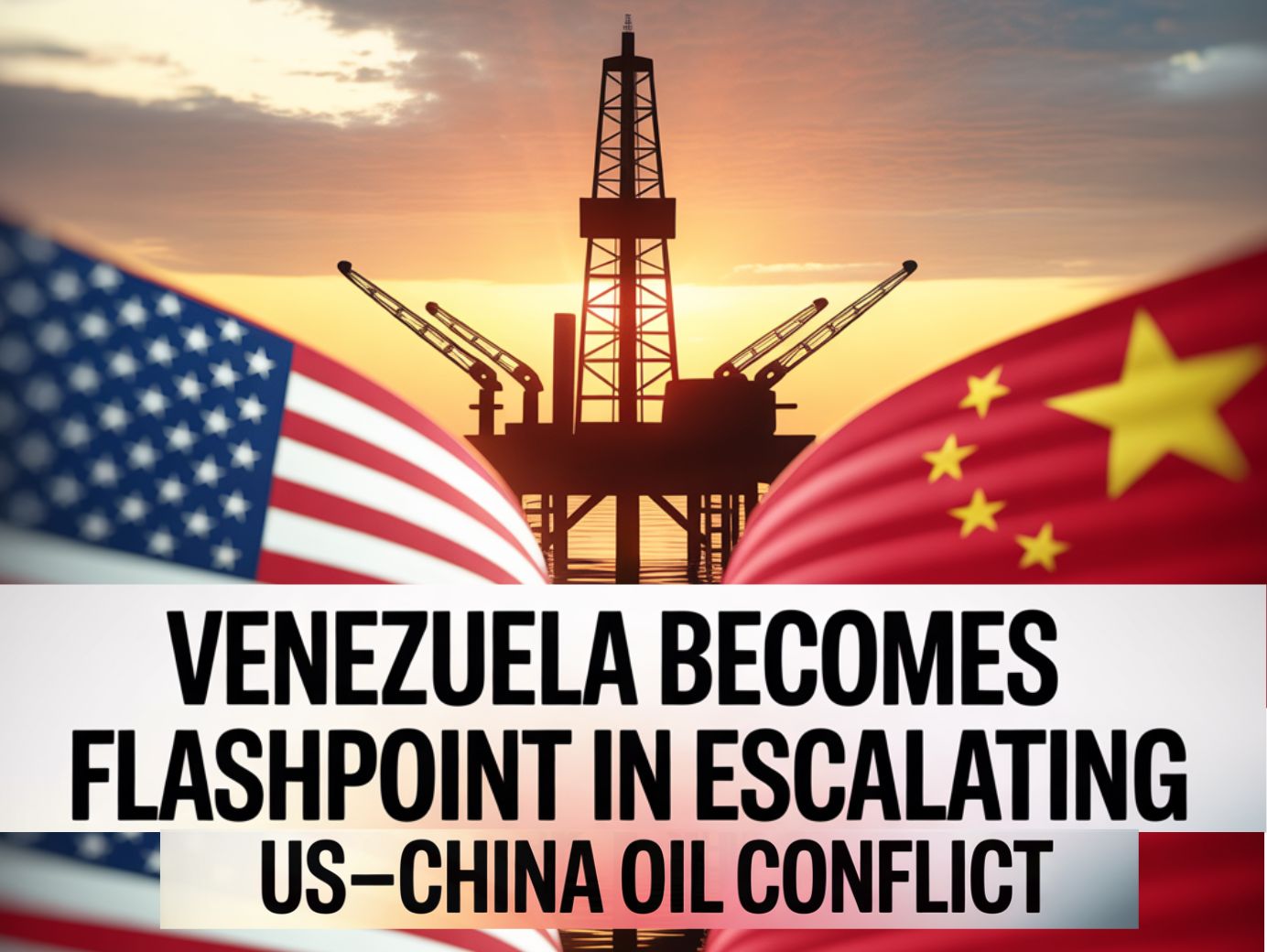
Venezuela is no longer just a troubled petrostate. It has become a pressure point where energy, finance, and geopolitics collide. What once looked like a slow erosion of Venezuela’s oil sector has abruptly turned into a high-stakes confrontation between Washington and Beijing. At the center of this shift is one hard truth: whoever controls Venezuelan crude controls leverage over global energy flows.
This is not a sanctions story. It is a control story. And control is what makes Venezuela the most dangerous frontline in the US–China oil war.
1. The Shock Doctrine Moment
The turning point was not gradual diplomacy. It was decisive intervention.
With the removal of Nicolás Maduro and the restructuring of Venezuela’s oil governance under US supervision, Washington effectively rewrote the rules overnight. The message was unambiguous: Latin American strategic resources fall under US security logic, not shared global stewardship.
Inside policy circles, this has been framed as a modernized Monroe Doctrine. Less ideology. More execution. The objective is simple: eliminate non-hemispheric rivals from the Western Hemisphere’s most critical assets.
For China, this was not just unexpected. It was destabilizing.
2. Oil Flows Have Been Rewired
Before this shift, China was the silent anchor of Venezuelan oil exports. Through direct shipments, debt-repayment barrels, and rerouted cargoes, Chinese refiners absorbed the majority of Venezuela’s exportable crude.
That model is now broken.
Under the new framework, Venezuelan oil is being redirected through US-approved channels, with North America emerging as the primary beneficiary. Volumes once earmarked for Asia are being repriced, rerouted, or withheld entirely.
This is not market rebalancing. It is forced reallocation.
Strategic insight: Oil routes define power more than oil reserves. And the routes now run through Washington.
3. China Loses Its Cheapest Strategic Barrel
For Beijing, Venezuelan crude was never about volume alone. It was about optionality.
Heavy Venezuelan crude came discounted, politically insulated, and tailored for Chinese refinery configurations. It allowed China to diversify away from Middle Eastern chokepoints while maintaining pricing leverage.
That advantage is gone.
With US oversight of Venezuelan exports described as open-ended, Chinese oil majors are now exposed to higher costs, higher risks, and fewer diplomatic workarounds. Alternative suppliers exist, but none offer the same combination of scale, discount, and strategic distance.
Energy security is not collapsing for China. But its margins are shrinking. And in energy geopolitics, margins are power.
4. Oil as a Weapon, Not a Resource
The United States is not simply selling Venezuelan oil. It is controlling how oil enters the global system.
Sales are being negotiated, proceeds are being managed, and compliance is being enforced through legal and financial architecture aligned with US interests. Every barrel now carries geopolitical intent.
This is a broader signal to the Global South: infrastructure loans and long-term supply agreements do not outweigh jurisdiction, enforcement power, and naval reach.
China’s model relies on patience and capital. The US model relies on speed and control. Venezuela exposed which one prevails when both collide directly.
5. Why Venezuela Is Different From Iran or Russia
China has navigated sanctions before. Iran and Russia still offer maneuvering room through gray markets and bilateral arrangements.
Venezuela does not.
This is the first major oil producer where export control, payment systems, and political transition are all aligned under direct US influence. That makes every shipment a geopolitical event rather than a commercial one.
For other resource-rich states watching closely, the lesson is uncomfortable but clear: strategic ambiguity disappears fast when great-power competition enters your energy sector.
What This Means Going Forward
For global energy markets
Expect volatility driven less by supply shortages and more by policy risk. Refining dynamics will favor regions aligned with US logistics and compliance frameworks.
For China
Beijing will accelerate diversification toward Russia, Iran, and domestic capacity, while reassessing how much geopolitical risk it is willing to absorb in Belt and Road energy investments.
For Venezuela
The country may see capital return, but under conditions that trade autonomy for stability. Its oil future will be shaped externally for the foreseeable future.
Venezuela is no longer a passive player in global energy. It is the test case for how oil wars are fought in the 2020s.
Not with embargoes.
Not with price wars.
But with control.
And in that contest, Venezuela has become the most dangerous battlefield in the US–China oil war.source
Follow for daily finance.
Markets, geopolitics, energy, and global money moves—decoded daily.