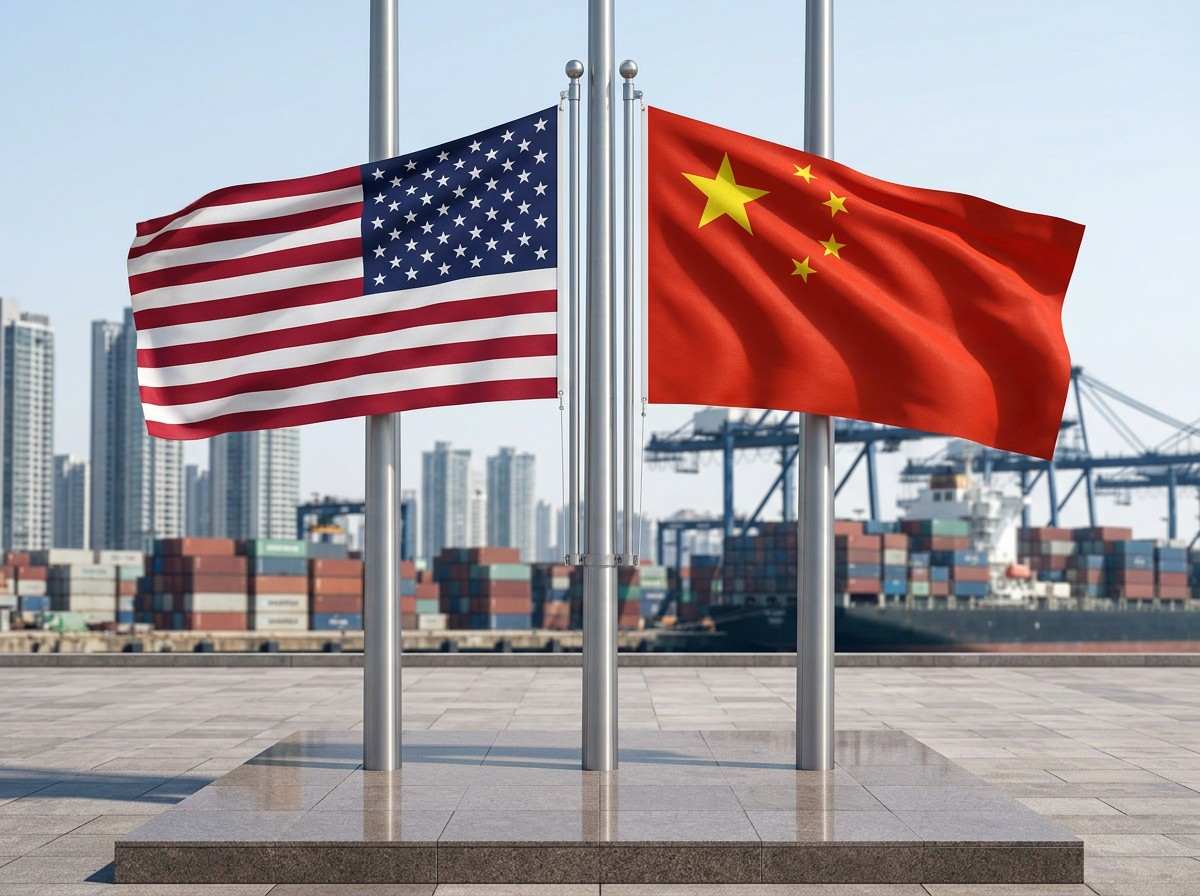
The United States and China have extended their trade truce through January 10, 2027, giving both governments additional time to implement existing arrangements and negotiate unresolved economic issues.
The extension was announced by China’s Commerce Ministry on September 28, following US President Donald Trump’s meeting with Chinese President Xi Jinping in Washington.
The latest framework covers more than tariffs. The two countries will discuss reciprocal tariff reductions covering $30 billion of products, establish a new trade council, create an agriculture working group, expand discussions on financial-services access, continue talks on direct flights and establish a communication channel for artificial intelligence-related incidents.
China has also agreed to import US coal during 2027 and 2028.
For global markets, the immediate significance is a reduction in near-term uncertainty around US-China trade. The extension does not resolve the broader disputes over technology, supply chains, market access and strategic economic competition.
US-China Trade Truce: What Changed?
The latest arrangement introduces several developments:
| Area | Latest development |
|---|---|
| Trade truce | Extended through January 10, 2027 |
| Tariffs | Discussions covering $30 billion of products |
| Trade council | New mechanism for regular economic discussions |
| Agriculture | Dedicated working group to address market access and regulation |
| Coal | China to import US coal in 2027 and 2028 |
| Financial services | China to examine approvals for foreign financial institutions |
| Artificial intelligence | New communication channel for AI-related incidents |
| Aviation | Continued discussions on increasing direct flights |
The measures provide additional time for negotiations but do not constitute a comprehensive US-China trade settlement.
When Does the US-China Trade Truce Expire?
The current US-China trade truce has been extended through January 10, 2027.
China’s Commerce Ministry said the extension will allow both sides to evaluate implementation of existing arrangements and continue discussions on economic and trade issues.
For companies, the additional period provides greater visibility when making decisions involving imports, exports, manufacturing, inventory and investment.
The January date is therefore an important policy checkpoint for businesses and financial markets.
What Is the $30 Billion US-China Tariff Arrangement?
The United States and China will discuss reciprocal tariff reductions covering approximately $30 billion of products.
The objective is to maintain stable bilateral economic and trade relations and create better conditions for affected trade flows.
The actual economic impact will depend on which products are covered and how the tariff changes are implemented.
This is important because a targeted tariff reduction does not necessarily change the wider US-China tariff relationship.
Companies will still need to monitor product-level tariff treatment and future policy announcements.
New US-China Trade Council Targets Investment and Trade Barriers
Washington and Beijing have agreed to create a trade council for regular economic discussions.
The council is expected to address:
- Investment opportunities
- Trade barriers
- Investment barriers
- Policy transparency
- Policy predictability
- Concerns raised by companies
The mechanism creates a formal channel for businesses and policymakers to discuss commercial obstacles.
Its economic significance will depend on whether those discussions lead to measurable changes in market access and investment conditions.
US-China Agriculture Talks Get a Dedicated Working Group
Agriculture will have its own working group under the new trade council.
The first meeting is expected before the end of 2026 and will focus on two-way agricultural market access and regulation.
Agricultural trade has long been an important part of US-China economic relations.
Changes in market access could affect US agricultural exporters, Chinese importers, commodity markets, shipping and logistics.
For investors, the working group’s results could provide another indication of whether the latest trade arrangements are producing practical economic changes.
China to Import US Coal in 2027 and 2028
Energy has also become part of the latest US-China trade framework.
China has agreed to import US coal during 2027 and 2028.
China’s Commerce Ministry said US coal would supplement domestic supplies and provide economic benefits to the US coal industry.
The agreement creates another bilateral commodity flow to monitor.
The market impact will depend on actual purchasing volumes, delivery schedules and how the trade affects existing coal supply chains.
China to Examine Access for US-Backed Financial Institutions
Financial services are another area covered by the latest arrangements.
China said it will examine and approve foreign financial-services institutions, including institutions with US capital, to conduct business and open branches in China.
For international banks and financial companies, this could create additional opportunities to expand their operations in the Chinese market.
The development also demonstrates that US-China economic relations extend beyond merchandise trade into banking, investment and financial services.
The next issue for markets will be whether the announcement produces specific regulatory approvals.
US-China AI Talks Create New Communication Channel
Artificial intelligence is becoming a central part of US-China economic and technology relations.
The United States and China have agreed to establish a communication channel for AI-related incidents and hold another dialogue by the end of November.
The talks take place against a wider technology relationship involving:
- AI development
- Advanced computing
- Semiconductors
- Data infrastructure
- Technology investment
- Export controls
The new communication mechanism does not remove the broader competition between Washington and Beijing over advanced technologies.
Instead, it establishes another government-to-government channel for discussing AI incidents and risks.
Why US-China AI Talks Matter for Global Technology Markets
AI policy increasingly affects companies involved in semiconductors, cloud computing, data centers and advanced computing.
The US and China are both important markets for the global technology industry.
Consequently, developments in AI policy can have effects beyond the two countries.
The November dialogue will be important because it could show whether the new communication mechanism develops into a more regular framework.
However, AI communication should be distinguished from broader technology policy. Discussions over AI incidents do not automatically change semiconductor restrictions, export controls or other technology measures.
US-China Supply Chains Remain a Separate Issue
The trade-truce extension may reduce immediate tariff uncertainty, but supply-chain risks remain.
Manufacturers have been reassessing their dependence on individual countries for components, raw materials and production.
Those decisions are influenced by more than tariffs.
Companies also consider:
- Export controls
- Critical minerals
- Production costs
- Logistics
- Supplier concentration
- Geopolitical risk
- Market access
As a result, an extended trade truce does not necessarily mean companies will reverse existing supply-chain diversification plans.
What Does the US-China Trade Truce Mean for Global Markets?
The latest developments affect several market sectors.
Global equities
Companies with significant exposure to US-China trade could benefit from greater short-term policy clarity.
The impact will vary according to each company’s products, supply chains and exposure to tariffs.
Commodity markets
US coal exports to China create an additional commodity trade flow.
Agricultural negotiations could also affect commodity markets if the new working group produces changes in market access.
Technology stocks
The AI dialogue introduces a new communication channel between Washington and Beijing, while wider competition over advanced technology continues.
Financial stocks
Potential approval of foreign financial institutions could create new opportunities for international banks and financial-services companies.
Manufacturing
Manufacturers may gain additional time to plan around tariff policy, although longer-term supply-chain strategies will depend on a broader set of economic and geopolitical factors.
Is the US-China Trade War Over?
No.
The extension of the trade truce does not resolve all US-China disagreements.
The two countries continue to deal with issues involving tariffs, advanced technology, investment, supply chains and market access.
The latest framework is better understood as an extension of negotiations and economic engagement, rather than a permanent trade settlement.
That distinction is particularly important for businesses making long-term investment and sourcing decisions.
What Happens Before January 10, 2027?
Several developments could shape the next phase of US-China economic relations.
1. Tariff implementation
Markets will need to see which products are included in the proposed $30 billion tariff arrangement.
2. Trade council discussions
The effectiveness of the new council will depend on whether it produces concrete changes in trade and investment conditions.
3. Agriculture negotiations
The first agriculture working-group meeting should provide more information about future market access.
4. US coal purchases
Actual Chinese purchasing volumes will determine the commercial significance of the 2027–2028 coal agreement.
5. Financial-services approvals
Investors will be watching for specific approvals involving foreign financial institutions.
6. November AI dialogue
The next AI discussion could provide more details about the new incident communication mechanism.
7. Direct flights
Further discussions could determine whether air connectivity between the United States and China expands.
8. Technology policy
Any new semiconductor, AI or advanced-computing restrictions could affect the broader economic relationship independently of the trade truce.
What Should Businesses Monitor?
Businesses with US-China exposure should focus on implementation rather than headline announcements.
Importers and exporters should monitor product-specific tariff changes.
Manufacturers should continue reviewing supply-chain concentration.
Financial institutions should follow regulatory developments affecting market access.
Technology companies should separately track AI, semiconductor and advanced-computing policies.
Commodity businesses should monitor coal and agricultural trade flows.
The extended truce provides additional planning time, but it does not remove the need for companies to prepare for policy changes.
The Bigger Economic Picture
The latest US-China framework creates additional space for economic engagement across multiple sectors.
The relationship now includes discussions covering tariffs, agriculture, coal, financial services, aviation and artificial intelligence.
That makes the January 10, 2027 deadline more significant than a simple tariff expiration date.
It provides a test of whether Washington and Beijing can turn a temporary reduction in trade tensions into more predictable commercial conditions.
For global markets, the central issue is therefore implementation.
The US-China trade truce has reduced some immediate escalation risk, but the deeper economic and technology competition remains.
The coming months will show whether the latest agreements produce a broader framework for trade and investment or another temporary pause in a relationship still shaped by competing economic and strategic interests.
Frequently Asked Questions
What is the latest US-China trade truce?
The United States and China have extended their trade truce through January 10, 2027, giving both sides additional time to implement existing arrangements and continue economic negotiations.
When does the US-China trade truce expire?
The latest extension runs through January 10, 2027.
What is the $30 billion US-China tariff agreement?
The United States and China will discuss reciprocal tariff reductions covering approximately $30 billion of products.
Did Trump and Xi end the US-China trade war?
No. The Trump-Xi summit produced additional trade and economic arrangements, but wider disagreements involving tariffs, technology, supply chains and market access remain.
What did the US and China agree about artificial intelligence?
The two countries agreed to establish a communication channel for AI-related incidents and hold another AI dialogue by the end of November.
Will China import US coal?
Yes. China has agreed to import US coal in 2027 and 2028.
Can US financial institutions expand in China?
China said it will examine and approve foreign financial-services institutions, including those with US capital, to conduct business and open branches in China.
Why is the January 10, 2027 deadline important?
It provides a key checkpoint for assessing whether the latest tariff, trade, agriculture, financial-services and other negotiations have produced further concrete agreements.
What does the US-China trade truce mean for investors?
The extension reduces some immediate trade-policy uncertainty, but investors still need to monitor tariffs, technology restrictions, supply chains, commodities, financial-services access and future negotiations.
Key Takeaway
The US-China trade truce now runs through January 10, 2027, while Washington and Beijing broaden economic discussions into tariffs, agriculture, coal, financial services and artificial intelligence.
The extension gives companies additional time to plan and gives negotiators another window to address outstanding issues.
But it is not a permanent US-China trade settlement.
For global markets, the next phase will be defined by what Washington and Beijing actually implement between now and January.