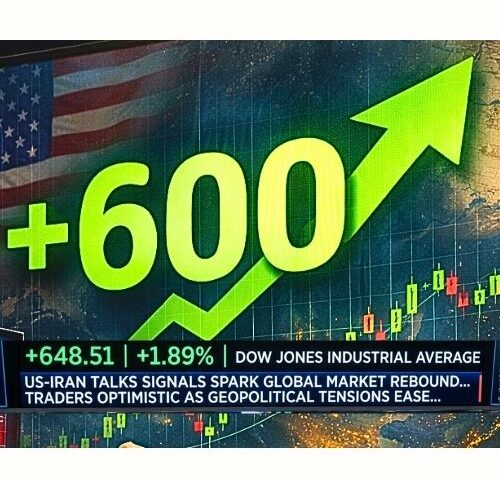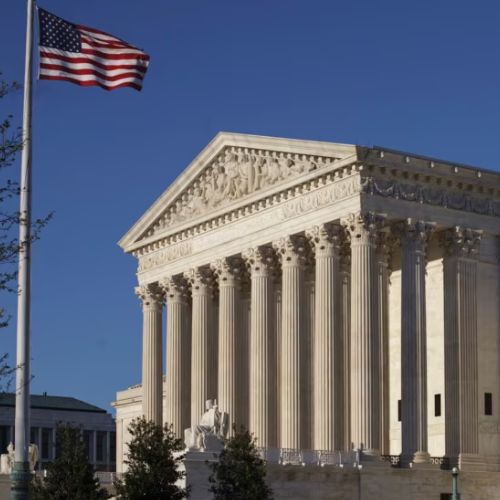
WASHINGTON D.C. — In a day of dizzying legal turns and high-stakes brinkmanship, the American financial landscape was turned upside down this Monday. What started as a historic victory for free-trade advocates in the halls of the Supreme Court ended with a defiant double down from the Oval Office, leaving investors with a severe case of policy whiplash.
A Short-Lived Victory for Importers
The morning began with a bombshell from the Supreme Court. In a 6-3 landmark decision, the Justices struck down President Trump’s sweeping reciprocal tariffs. The Court’s opinion was pointed: it ruled the administration had illegally stretched executive emergency powers (the IEEPA) to bypass Congress, failing to prove that a legitimate balance-of-payments crisis actually existed.
For roughly ninety minutes, the mood on Wall Street was electric. Futures for major retailers like Walmart and Target turned green, and international markets particularly in India and Southeast Asia saw a massive relief rally. The era of the global trade war, it seemed, had hit a judicial brick wall.
The 15% Counter-Punch
That optimism evaporated by mid-morning. Proving that he has no intention of backing down, President Trump stood before cameras at the White House and effectively hit the reset button—harder.
Invoking Section 122 of the Trade Act of 1974, the President announced a brand-new 15% global levy. Not only did he bypass the court’s specific legal objections, but he actually increased the tax from the previous 10% rate.
The President declared that the courts can play their games, but he is playing for the American worker. He suggested that if 10% was a problem for the judges, they could see how they like 15%.
Chaos on the Trading Floor
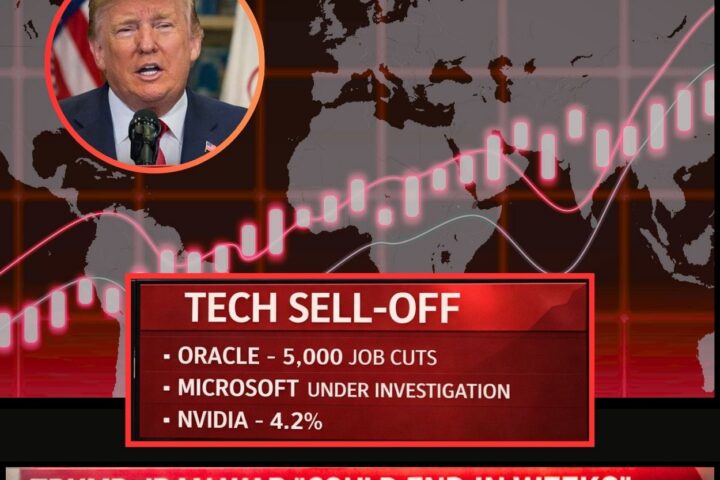
The reaction from the markets was a swift, collective groan. S&P 500 futures, which had been up on the court news, swung violently into the red, dropping 0.7%. The tech-heavy Nasdaq took an even harder hit, falling 1.0% as traders realized that the supply chain nightmare for hardware and electronics isn’t over it’s getting more expensive.
The immediate fallout is a logistical and legal mess:
- The Refund Trap: U.S. Customs is now sitting on an estimated $175 billion in illegal tariffs collected over the past year. Companies are already filing a mountain of paperwork to get that cash back, even as they brace for the new 15% hike starting tomorrow.
- The Flight to Safety: With the U.S. government now in a direct constitutional cat-and-mouse game, investors fled to gold, pushing the metal back toward its record territory of $5,100 per ounce.
- The Tech Shield: All eyes are now pinned on Nvidia, which reports earnings this Wednesday. Investors are desperately hoping the AI boom is strong enough to outrun the escalating trade war.
Predictions: What Happens Next?
- The Nvidia Hedge: Expect massive volatility in the 48 hours leading up to Wednesday’s Nvidia earnings. If the AI giant misses even slightly, the double whammy of trade uncertainty and a tech slowdown could trigger a 3–5% broad market correction.
- A New Legal Cycle: Constitutional scholars predict the new 15% tariff will face immediate injunction filings in lower courts by the end of the week. However, since the President is using Section 122 (Trade Act), the legal path for challengers will be much longer and steeper than the previous IEEPA battle.
- Consumer Price Hikes: Retailers have exhausted their inventory buffers. Expect a visible jump in consumer electronics and apparel prices by the Q3 back-to-school season as companies pass the 15% levy directly to shoppers.
FAQS
1.What exactly did the Supreme Court rule? The Court decided that the President cannot use “Emergency Economic Powers” to tax the entire world just because of a trade deficit. They ruled that only Congress has the power to set taxes (tariffs).
2.Does this mean I get a refund on goods I already bought? Likely no. While big corporations will sue the government for the $175 billion in collected tariffs, those savings rarely trickle back down to the individual consumer.
3.Why is Bitcoin falling if it’s “Digital Gold”? In times of extreme policy uncertainty, Bitcoin often trades like a high-risk tech stock. Today’s 5% drop suggests traders are liquidating “risky” assets to cover losses elsewhere.
4.How does the 15% tariff affect my 401(k)? In the short term, it creates “drag” on profits for multinational companies. However, domestic-focused small caps might see a relative boost if they don’t rely on imports.
Follow DAILY FINANCE for Real-Time Updates
Stay connected with the heartbeat of the markets. For breaking news alerts, expert commentary, and exclusive financial data, follow our official channels: