The US stock market today is opening under serious pressure, and this time the reason is not complicated. A war that nobody expected to last this long is now reshaping how investors think about every asset class from tech stocks to oil futures, and the damage is visible in every index on the board.
This is not background noise. This is the story of your money right now.
Table of Contents
- Where the US Stock Market Stands This Morning
- Why the Iran War Is Driving Everything Right Now
- The Stagflation Word Nobody Wanted to Hear
- Which Stocks Are Hurting and Which Are Holding
- What the Federal Reserve Is Thinking
- What Happens This Week and Why It Matters
- What You Should Actually Do With Your Money Today
- Your Questions Answered
Where the US Stock Market Stands This Morning
Sunday night, before a single trade was placed, the signals were already bad. US equity futures fell Sunday evening. Dow Jones futures dropped 253 points, or 0.6%, while S&P 500 futures and Nasdaq 100 futures each lost 0.5%.
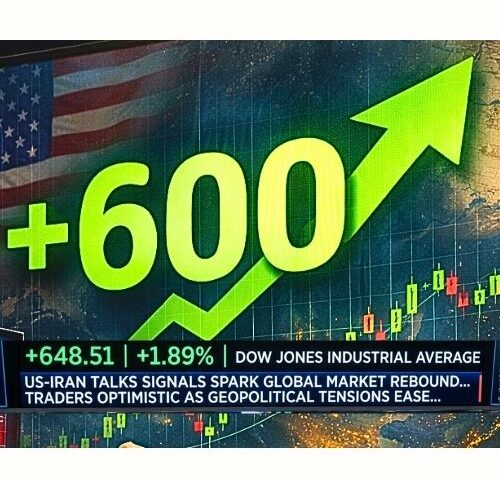
That follows one of the worst Fridays Wall Street has seen in years. The Dow Jones Industrial Average tumbled 793.47 points, or 1.73%, closing at 45,166.64. The S&P 500 dropped 1.67% and ended at a seven-month low of 6,368.85, notching its fifth straight weekly decline. The Nasdaq Composite declined 2.15% and settled at 20,948.36.
Five consecutive weeks of losses. That is the longest losing streak since 2022, a year nobody in the investment world looks back on fondly.
The picture under the surface is actually worse than the headline numbers suggest. The maximum drawdown for the S&P 500 has been around 7% from recent highs, but the average member of the index has seen a 17% drawdown. In the Nasdaq Composite, the average member has seen a 31% drawdown. Corrections are happening through a process of rotation and churn rather than indexes falling all at once.
Put simply, most individual stocks have been hit far harder than the indexes are showing. If your portfolio feels worse than the Dow suggests, that is exactly why.
Why the Iran War Is Driving Everything Right Now
Let us be direct about what is actually happening here. This market is not falling because of quarterly earnings disappointments or a slowing tech cycle. It is falling because a war in the Middle East is refusing to end, and that war is sending oil prices to levels that change the math for every business in America.
Equity losses accelerated into the close Friday, with the S&P 500 dropping 1.7%. The Nasdaq 100 fell into a correction, sliding over 10% from its peak. Brent topped $112 per barrel.
As the war in Iran stretches into a fifth week, investors who had been hopeful for a quick resolution are growing increasingly uneasy about the real-world fallout from the conflict. Yemen’s Houthis said Saturday they had launched missiles at Israel, marking their first direct involvement in the war and signaling the conflict is widening.
Japan’s Nikkei 225 fell 3.97% and Australia’s ASX 200 lost 1.46%. Hong Kong’s Hang Seng dropped 1.52%. This is a globally synchronized risk-off move, not a uniquely American problem.
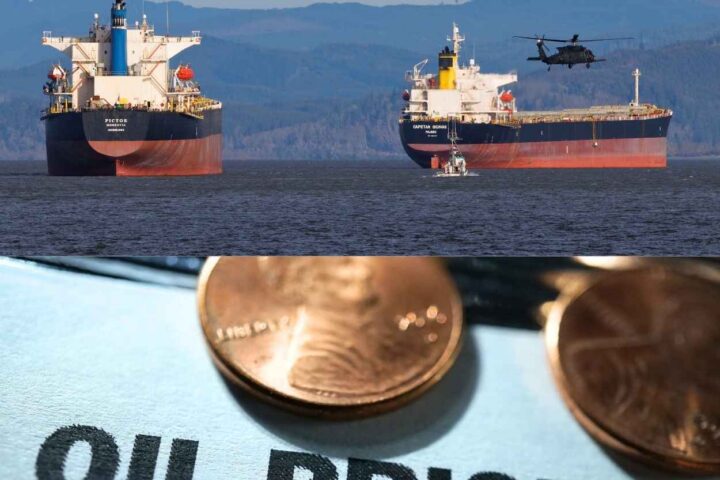
When oil stays above $110, the ripple effects are everywhere. Trucking costs rise. Airline fuel bills explode. Food distribution becomes more expensive. Every business that moves goods or uses energy, which is almost every business that exists, starts to feel the squeeze. And consumers feel it at the pump before they feel it anywhere else.
The Stagflation Word Nobody Wanted to Hear
There is a word starting to appear in analyst notes and Fed speeches that markets have not had to take seriously in decades. That word is stagflation, and it means what it sounds like: high inflation combined with slowing growth. It is the economic scenario that gives central bankers nightmares because there is no clean policy response to it.
From a technical standpoint, the S&P 500 remains in a downtrend, well below its 200-day moving average of 6,633. Technical support is not evident much below this week’s lows until the 6,200 level on the index.
The surge in energy prices had already dimmed expectations of a Fed rate cut this year, while concerns magnified after China opened a trade probe against the US in retaliation to tariffs imposed by Washington.
The Fed came into 2026 expecting to cut rates. Markets were pricing in those cuts. Neither the Fed nor the markets expected oil above $110, and neither built a proper contingency for what happens to inflation when a Middle East conflict disrupts global energy supply for more than a month.
Philadelphia Federal Reserve President Anna Paulson said that inflation running above the central bank’s 2% target is making her more apprehensive about policy. “If inflation were at the 2-percent target, I would feel more comfortable being patient,” she said directly.
She is nowhere near 2%. The OECD is now forecasting US inflation at 4.2% for 2026, nearly double what Fed officials themselves projected just months ago. That gap between expectation and reality is precisely what markets are currently pricing with five weeks of losses.
Which Stocks Are Hurting and Which Are Holding
The market is not falling evenly, and that distinction matters enormously for how you think about your own portfolio right now.
Tech heavyweights remained under significant pressure with Nvidia dropping 2.2%, Microsoft falling 2.5%, and Alphabet shedding 2.5%, while Meta saw steeper declines of 4% amid shifting risk sentiment. Financial and credit-sensitive stocks also struggled, with JPMorgan falling 3% and Visa losing 3.3%. The decline in the Dow was led by Amazon falling 3.85%, Salesforce dropping 3.41%, and Visa losing 3.38%.
Growth stocks, technology companies, and anything dependent on cheap borrowing costs or global supply chains is getting punished daily. The logic is straightforward and brutal. These companies’ valuations depend on future earnings, and when interest rates stay elevated, those future earnings are worth less in today’s money.
On the other side of this trade, energy giants like Exxon Mobil bucked the broader trend, gaining 3.5% as WTI crude futures topped $99 per barrel. Gold and commodities are absorbing the capital flowing out of growth stocks. Defensive, cash-generating businesses with real pricing power are surviving while speculative positions collapse.
Cybersecurity stocks including CrowdStrike and Palo Alto Networks were among the worst performers, falling 6% and 4% respectively, as the pullback in risk positioning dented confidence in speculative AI-adjacent positions.
What the Federal Reserve Is Thinking
The Fed is in an impossible position, and the market knows it. If they cut rates to support growth, they pour fuel on an inflation fire already burning hotter than projected. If they hold or raise rates to fight inflation, they risk tipping an already wobbling economy into contraction.
When surveyed, almost two thirds of market participants, 66.5%, said the Fed’s decision to hold rates unchanged was the right move. Only one in seven, 14.2%, said the Fed should have cut rates, while 13.7% said the central bank should have raised rates.
That 13.7% who think rates should go higher is the number worth watching. Three months ago, that figure was essentially zero. The fact that it is now approaching 14% tells you how dramatically the inflation conversation has shifted since the war began.
What Happens This Week and Why It Matters
This is a shortened trading week, with markets closed Friday for Good Friday. That compression makes every data point hit harder than normal because there are fewer trading days to absorb the reaction.
Today, March 30, no major earnings or data releases are scheduled, giving markets a chance to move on sentiment and geopolitical headlines alone. Tuesday brings the March Consumer Confidence index and JOLTS Job Openings data, along with Nike earnings, which will serve as a real-world gauge of consumer demand. Wednesday delivers the ADP Employment Survey, ISM Manufacturing PMI, and retail sales data. Friday brings the March nonfarm payrolls report at 8:30 a.m. Eastern, but markets are closed, meaning the reaction comes Monday, April 6.
Nike reporting on Tuesday carries more weight than a normal consumer company earnings call right now. If Nike signals weakening demand or rising costs from logistics, it validates the stagflation narrative in a tangible, headline-friendly way. If they beat, it offers a small but real counterargument to the doom loop.
The jobs report on Friday is the most important single data point of the entire week, even though markets cannot react until the following Monday. Economists are expecting job creation to have recovered strongly in March after a weak February. If those expectations are met, it complicates the Fed’s situation further: a strong labor market alongside 4% inflation means rate cuts are truly off the table.
What You Should Actually Do With Your Money Today
The most dangerous thing you can do in a fear-driven market is make permanent decisions based on temporary panic. The second most dangerous thing is doing absolutely nothing and assuming this resolves itself.
Do not panic sell this morning. Five weeks of consecutive losses is exactly when markets often find short-term relief. Selling at the point of maximum fear locks in losses at the worst possible price. If you have held through five weeks of this, the intelligent question is not whether to exit, it is whether your current allocation still makes sense.
Revisit your sector exposure honestly. If a large portion of your portfolio is concentrated in high-growth tech, that bet is being tested in a way it has not been since 2022. Energy, gold, defense, and value-oriented businesses with strong cash flows have been the consistent outperformers across this entire period. Rebalancing toward these is not speculation, it is recognizing what the current macro environment actually rewards.
Watch the VIX closely. It is approaching 30 and investors are paying up for hedges with a strong bias toward puts. A VIX reading above 30 signals extreme fear. When it starts moving below 25, that is the first real signal that market anxiety is genuinely easing.
Watch Brent crude above everything else. This market does not recover until energy prices give investors a reason to believe inflation is peaking. Brent falling sustainably below $95 would be the single clearest signal that the worst of this inflation shock is passing.
Seasonally, April is historically the second-best month for the Dow Jones Industrial Average, averaging a 1.8% gain going back to 1950. That mean reversion opportunity only exists if you have capital available to deploy when the turn comes. Holding some cash right now is not a sign of weakness. It is preparation.
Stay Ahead of Every Market Move
The market does not wait for anyone. Neither should you. DF Media delivers daily US market analysis, breaking financial news breakdowns of what is actually moving your money and why.
Your Questions Answered
Why is the US stock market falling today on March 30 2026?
Dow futures opened 253 points lower Sunday night as the Iran war enters its fifth week with no ceasefire in sight, Brent crude sits above $110, and stagflation fears are pushing markets to price in the possibility of a Fed rate hike rather than a cut by year end.
Is this a stock market crash or a correction?
The Nasdaq and Dow are both officially in correction territory, defined as a decline of more than 10% from recent highs. The S&P 500 is approaching that threshold. This is a correction with crash-like characteristics under the surface, where the average Nasdaq stock has already fallen 31% from its high.
Which stocks are actually going up right now?
Energy companies with direct exposure to oil prices, gold-linked assets, and selective defensive names with strong cash flows. Exxon Mobil gained 3.5% on Friday while the rest of the market fell sharply.
What is the next major support level for the S&P 500?
Technical analysts are pointing to 6,200 as the next meaningful support level below current prices. The index closed Friday at 6,368.85.
Should I buy this dip or wait?
No financial advice can apply to your specific situation, but the historically relevant pattern is that buying during fifth or sixth week losing streaks, when the VIX is above 30 and sentiment is at multi-month lows, has tended to produce positive returns over the following six to twelve months. The risk is that this time the macro environment, a war, rising oil, and a trapped Fed, is different enough to extend the timeline significantly.
Published: March 30, 2026 | Focus Keyword: US stock market today | Reading Time: 6 minutes | Source: DF Media