Daily Finance | Markets Desk | April 29, 2026
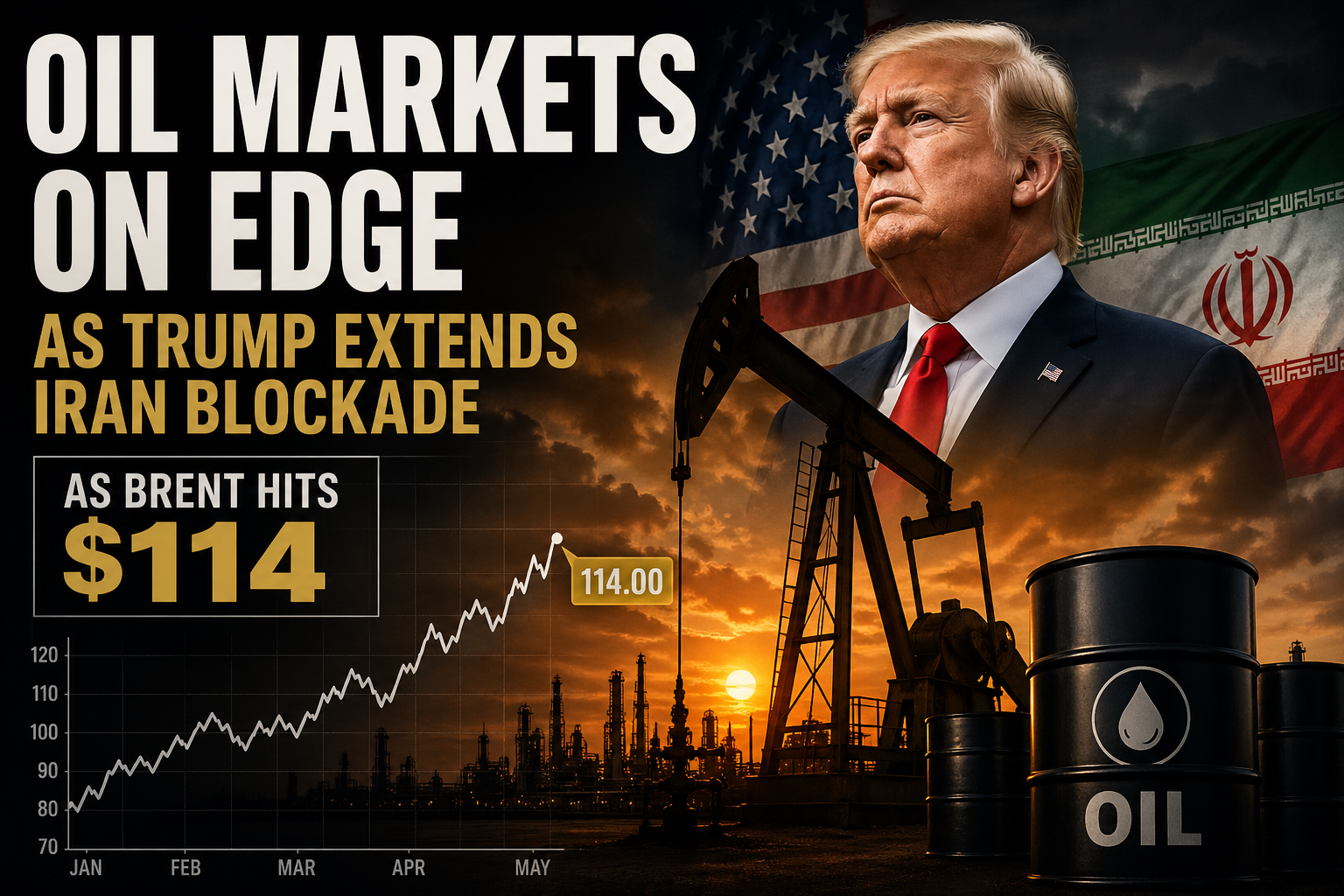
Oil prices surged sharply on Wednesday, with Brent crude climbing 3% to hit a one-month high of $114.59 a barrel, as fears of a prolonged supply crunch gripped energy markets. The rally, now stretching across eight consecutive sessions for Brent, was fuelled by reports that U.S. President Donald Trump is preparing to extend his blockade of Iranian ports, a move that traders fear will deepen an already fragile supply situation in the Middle East.
The Wall Street Journal reported late Tuesday, citing U.S. officials, that Trump has instructed aides to plan for a continued port blockade aimed at squeezing Iran’s economy and oil exports. Trump himself stoked tensions further on Wednesday, posting on Truth Social that Iran “better get smart soon,” signalling that any near-term diplomatic resolution remains distant.
U.S. West Texas Intermediate futures climbed alongside Brent, rising 3.6% to $103.48 a barrel, its highest level since April 13. WTI has now posted gains in seven of the last eight trading sessions, accumulating a staggering 49% rise since the U.S. and Israeli-led military campaign against Iran began on February 28.
Strait of Hormuz Remains the Central Pressure Point
The ongoing closure of the Strait of Hormuz continues to sit at the heart of the oil market’s anxiety. The strait, through which roughly 20% of the world’s oil supply passes, has been effectively shut to normal commercial traffic since the conflict escalated. Abu Dhabi National Oil Company has already notified select customers that two crude grades will need to be loaded from outside the Gulf next month, reflecting the logistical strain rippling across the industry.
Yang An, analyst at Haitong Futures, put it plainly: if Trump extends the blockade, supply disruptions will worsen and continue pushing prices higher with little near-term relief in sight.
UAE’s OPEC Exit Adds Complexity, Not Immediate Supply
Energy markets also absorbed the shock of the United Arab Emirates announcing its departure from OPEC, effective May 1. While the move was widely interpreted as a long-term bearish signal, freeing the UAE to pump beyond its quota, analysts were quick to temper expectations of any immediate impact.
ING analysts noted that the UAE’s exit, though a significant institutional blow to OPEC, cannot translate into additional market supply until the Strait of Hormuz reopens and oil flows normalise. ANZ Research echoed this, stating that prices remain driven by geopolitics, logistics, and inventory levels rather than organisational shifts within producer blocs.
In the medium term, the UAE’s unconstrained output potential is expected to push the Brent forward curve into deeper backwardation, a market structure that typically signals tight near-term supply against expectations of future easing.
Inventories Add a Modest Tailwind
Compounding the upward price pressure, the American Petroleum Institute reported a second consecutive weekly decline in U.S. domestic crude inventories. Formal confirmation from the U.S. Energy Information Administration was awaited later Wednesday and, if confirmed, would add further support to an already bullish market sentiment.
The Bigger Picture
With negotiations between the U.S. and Iran stalled and no ceasefire agreement formalised despite a temporary pause in hostilities, markets have little reason to price in a supply recovery in the near term. Until there is a clear resolution that restores uninhibited energy flows through the Strait of Hormuz, both Brent and WTI look set to remain elevated. Traders will be watching Trump’s next move closely, and in this market, every Truth Social post carries a price tag.