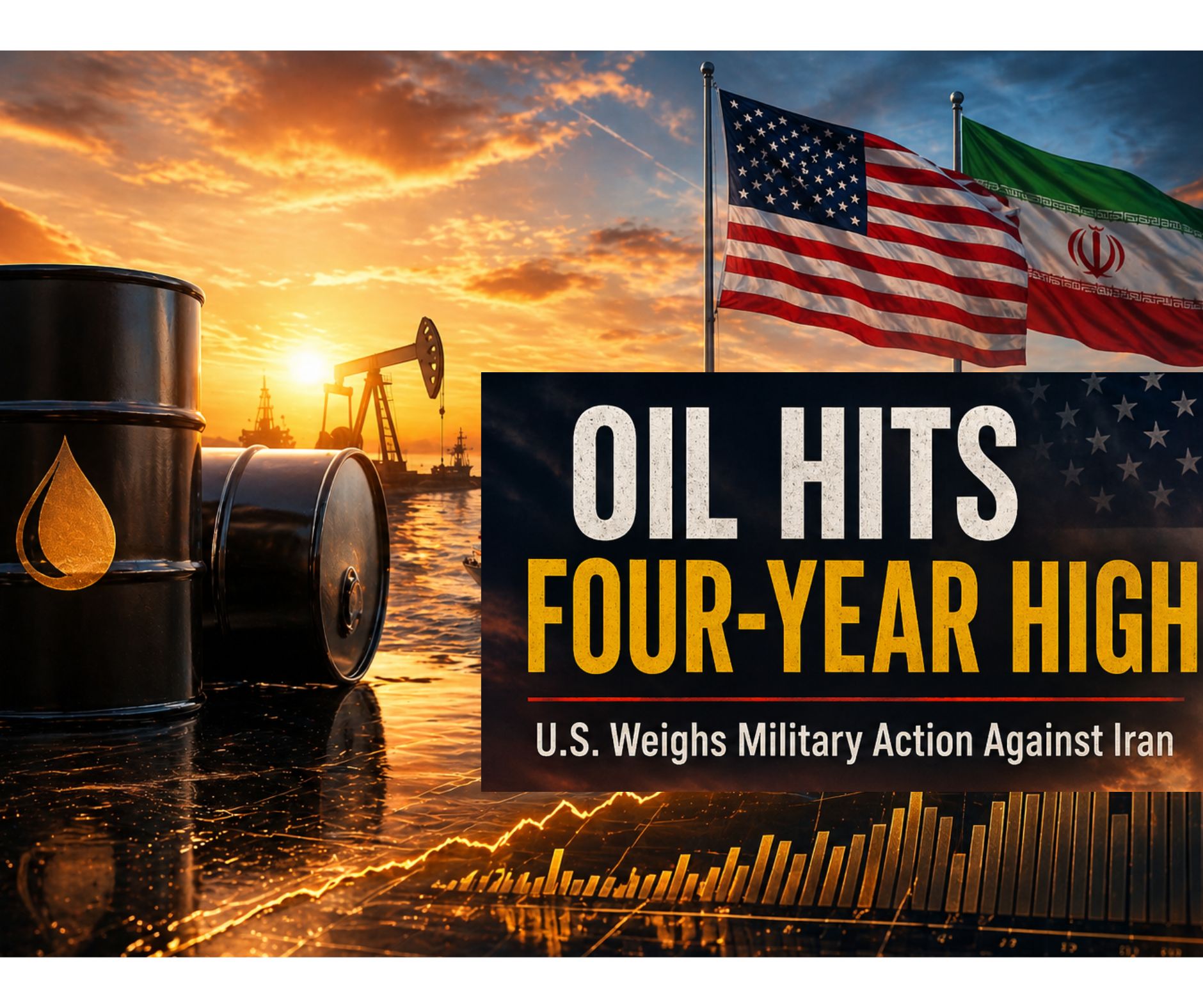
London/New York, Apr. 30, 2026 — Brent crude surged to its highest level in four years on Thursday after reports emerged that U.S. President Donald Trump is set to receive a briefing on new military options for action against Iran, reigniting fears of a prolonged energy supply crisis centred on the Strait of Hormuz.
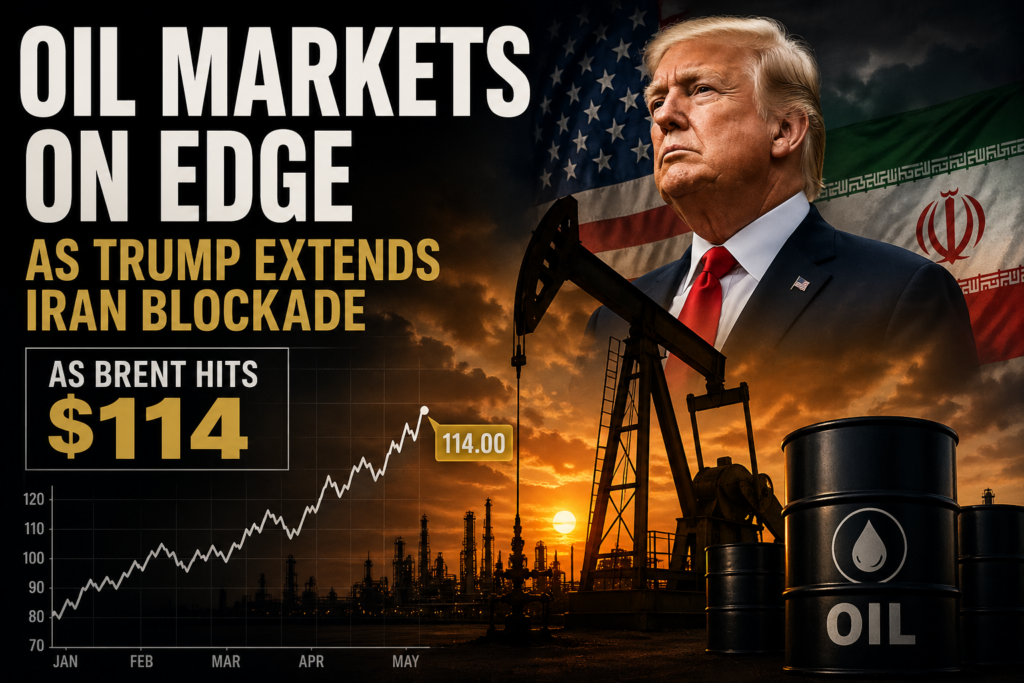
The global benchmark jumped as much as 7.1% to surpass $126 a barrel, a level not seen since the immediate aftermath of Russia’s invasion of Ukraine in 2022, before easing slightly to trade near $122. July futures, the more actively traded contract, climbed as high as $114.70 a barrel.
Strike Plans Under Review
According to a report by Axios, the head of U.S. Central Command, Admiral Brad Cooper, is scheduled to brief Trump on Thursday regarding options that could include a short and powerful wave of strikes on Iranian infrastructure. Admiral Cooper delivered a similar briefing to the president on February 26, shortly before the United States and Israel launched military operations against Iran.
The development signals that a resumption of active combat operations is now being seriously considered at the highest levels of the U.S. government.
Strait of Hormuz Remains Effectively Closed
The Strait of Hormuz, through which a significant share of the worlds crude oil and liquefied natural gas flows, has been effectively shut since the conflict began in late February. Both the United States and Iran have maintained naval blockades of the waterway, choking off energy flows and steadily driving up global prices.
The International Energy Agency has described the conflict as the biggest supply shock in history. Vitol Group estimates the market is facing a total supply loss of around 1 billion barrels. U.S. crude exports meanwhile surged to a record last week, with overseas shipments rising above 6 million barrels a day as global buyers sought American supply to replace lost Middle Eastern volumes.
No End in Sight
A ceasefire has technically held since early April, but diplomatic efforts to bring negotiators from both sides to the table have so far failed. Trump told Axios separately that he would not lift the U.S. naval blockade on Iranian ports until a nuclear deal with Tehran is secured. Iranian officials have remained defiant throughout the standoff.
Trump has ripped away the security blanket the market was clinging to, said Robert Rennie, head of commodity research at Westpac Banking Corp. Traders are now being forced to confront a much uglier reality: both sides still think they are winning, neither side has a clear incentive to negotiate, and energy prices are starting to accelerate higher.
Washington Expands Its Offensive
The Trump administration is now seeking the forfeiture of two Iran-linked oil tankers seized by U.S. naval forces, a move that would mark a significant escalation of Washington’s economic campaign against Tehran. The U.S. has already turned away dozens of ships since deploying warships to block Iranian vessels on April 13.
Washington is also asking allied nations to join an international coalition that would allow commercial shipping to transit the Strait of Hormuz safely, according to a Wall Street Journal report citing an internal State Department cable sent to U.S. embassies this week.
Market Outlook
Supply tightness is increasingly visible in futures pricing. The spread between Brent’s two nearest December contracts has widened to over $11 a barrel, compared to around $3 just two months ago.
Prices have nowhere to go but up until a Strait of Hormuz reopening comes into line of sight, said Vandana Hari, founder of Vanda Insights. As of now, how and when that might happen is anybodys guess.
Karen Young, senior research scholar at Columbia University’s Center on Global Energy Policy, put it plainly. The market is realizing we are not coming to any solution in terms of traffic in the strait, she said. Price pressure just has to mount until we get to some demand destruction.
With no diplomatic breakthrough in sight and military options now back on the table, energy markets are bracing for further volatility in the days ahead.