Markets today September 7 2026 are opening to a dramatically changed oil market: Brent crude is at $97.48 a barrel and climbing after the United States and Iran exchanged direct strikes on commercial vessels over the weekend, driving Hormuz tanker traffic to its lowest level since May. With Canada set to retaliate against US tariffs tomorrow and the Fed’s September 15 meeting now eight days away, this is the most consequential Monday for global markets in months.
Markets Today September 7 2026: The Weekend That Changed Oil Markets
The US-Iran maritime conflict entered a dangerous new phase on Saturday. US Central Command confirmed that American forces struck three Iranian oil tankers, including one off the coast of Kharg Island — Iran’s key oil export hub. In retaliation, Iran’s Islamic Revolutionary Guard Corps (IRGC) navy said it targeted three oil tankers travelling through unauthorized routes in the Strait of Hormuz, plus three additional US vessels in other areas. Six vessels struck in a single day. Maritime intelligence firm Marisks called it a “major escalation in the maritime conflict.”
“Commercial tankers are now being deliberately used as instruments of reciprocal economic pressure, substantially weakening the previous distinction between military confrontation and commercial shipping,” Marisks said.

Brent at $97.48 After the Worst Week for Oil Supply in Years
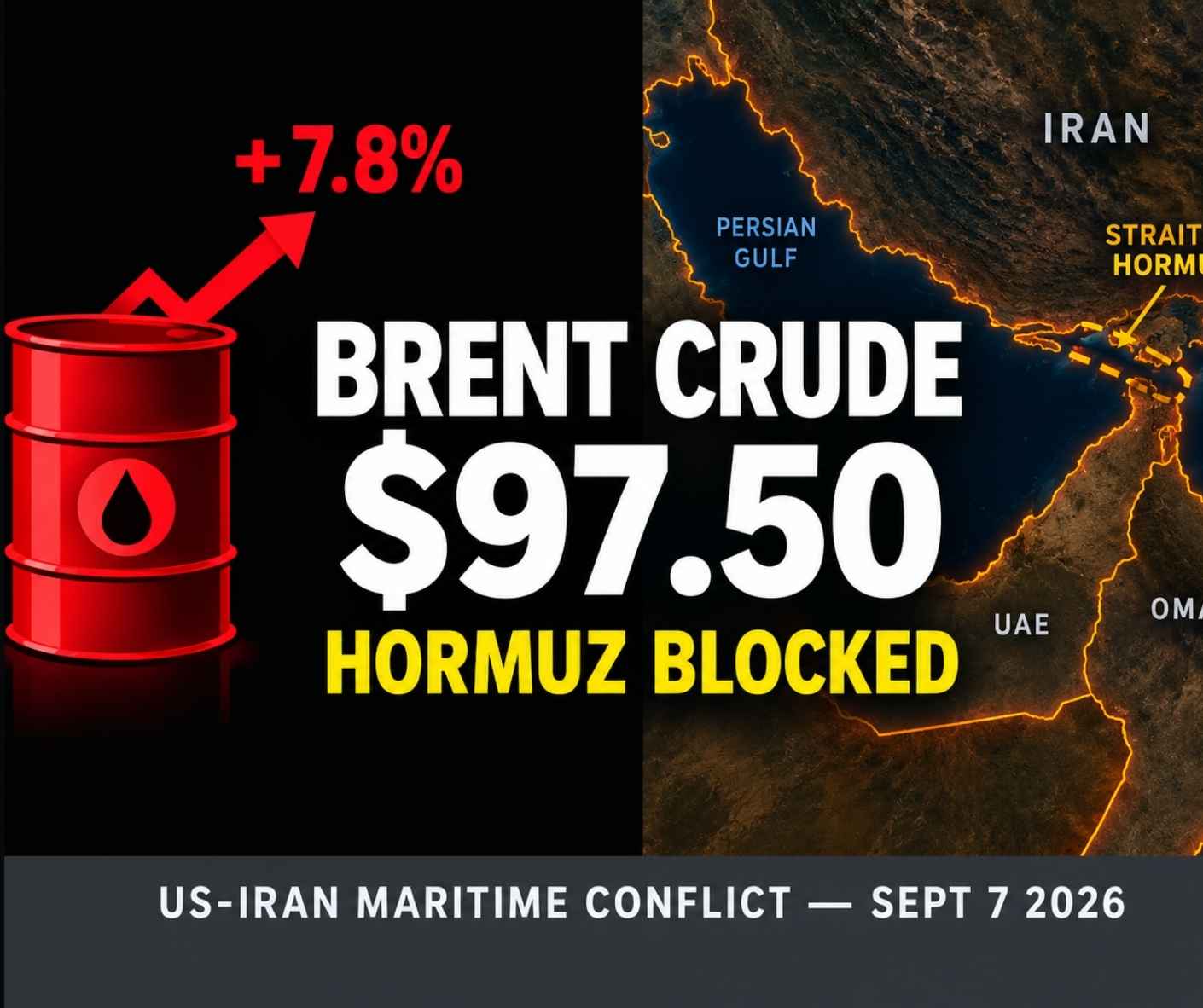
Brent crude futures climbed $1.20, or 1.25%, to $97.48 a barrel by early Monday morning. US West Texas Intermediate (WTI) rose $1.14, or 1.25%, to $92.62. But these Monday gains are only the latest chapter in a brutal week for energy markets: Brent rose 7.8% last week and WTI gained nearly 10% as US-Iran strikes on vessels caused a measurable reduction in oil flows through the Strait of Hormuz.
The Strait of Hormuz is the world’s most critical energy chokepoint. Roughly one-fifth of the global oil supply used to transit through it daily. That volume is now shrinking fast. Data from analytics firm Kpler showed that an average of just 10 commodity ships transited the strait per day over the past 10 days — the lowest level since May.
“If tanker traffic begins to slow materially, the market could price in a much larger supply shock. And there are already signs that this is happening,” said Priyanka Sachdeva, head of market insights at Phillip Nova.
Iran Plans a Restricted Zone Outside the Strait
The situation is set to deteriorate further. Mohsen Rezaei, secretary of Iran’s Supreme National Security Council, said on Sunday that a restricted zone will be announced outside the Strait of Hormuz within days, according to Iranian state media. That announcement alone could push Brent toward $100 a barrel or beyond, as it would effectively formalize Iran’s control over an expanded maritime exclusion area that catches vessels rerouting around the strait.
ANZ analysts described the most likely scenario as “a prolonged standoff, punctuated by calibrated military action by the US and Iran.” They expect Iranian oil exports to remain constrained through the rest of 2026, with a gradual reopening only possible late in Q4 2026. A full return to pre-war throughput is not expected until late Q1 or early Q2 2027 — meaning this supply shock has months left to run.
OPEC+ Holds Output Unchanged for October
OPEC+ met on Sunday and kept its oil output policy unchanged for October. The group said it needs to agree on new quotas before deciding its next production steps. The decision to hold — rather than increase supply to offset the Iran disruption — removes a potential price ceiling for crude. With Hormuz throughput at May lows and OPEC+ standing pat, the supply-demand math for oil is turning sharply more bullish heading into the fall.
Canada Retaliates Against US Tariffs Tomorrow
Monday’s oil story is not the only geopolitical risk in play. Canada is set to announce retaliatory measures against US 50% tariffs on September 8 — tomorrow. North American supply chains, particularly in automotive, agriculture, and manufacturing, are directly in the crossfire. Canadian equities and the loonie will be under pressure today as markets price in the retaliation before the announcement. This US-Canada trade war has been escalating since summer and represents a separate but compounding risk for North American equities already under pressure from oil and rising yields.
Fed, Bitcoin and Stocks with 8 Days Until September 15
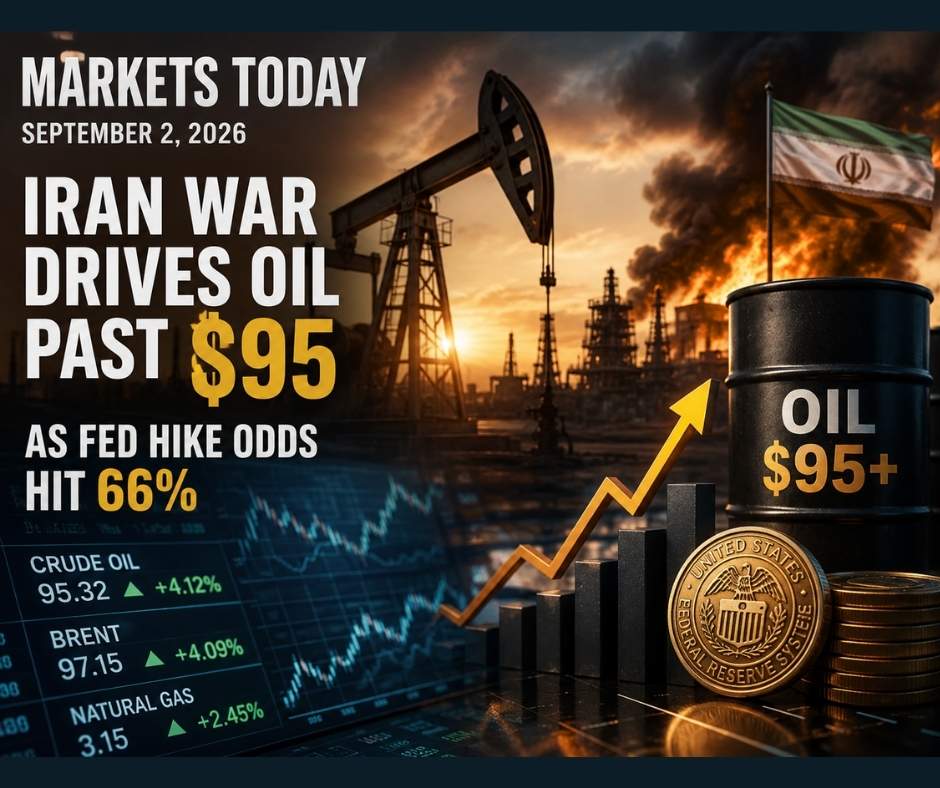
The Federal Reserve’s September 15 meeting is now eight days away. As of last week, CME FedWatch was pricing a 66% probability of a 25-basis-point rate hike. The oil surge only adds to that pressure: energy-driven inflation makes it harder for the Fed to justify a hold. The 10-year Treasury yield has been climbing — sitting at 4.79% as of Friday — and is likely to push higher again today given the weekend escalation.
Bitcoin was trading near $77,900 heading into the weekend, down from its August peak near $80K. A risk-off Monday with surging oil and rising yields is not a constructive setup for crypto. The $77K support level remains key — a break below could accelerate selling in the week leading into the Fed decision. Equities face a similar dynamic: the S&P 500 and Nasdaq were already under pressure last week, and the oil shock adds a new inflation layer that the market has not yet fully priced.
Key Market Data for September 7 2026
| Asset / Indicator | Level | Move |
|---|---|---|
| Brent Crude | $97.48 /barrel | ↑ +1.25% (+7.8% last week) |
| WTI Crude | $92.62 /barrel | ↑ +1.25% (+10% last week) |
| Hormuz Daily Ship Transits | ~10 ships/day | ↓ Lowest since May |
| Fed Hike Odds (Sept 15) | 66% | ↑ vs 30% pre-Jackson Hole |
| 10-Year Treasury Yield | 4.79% | ↑ |
| Bitcoin (BTC) | ~$77,900 | ↓ from $80K Aug peak |
| Canada Tariff Retaliation | Sept 8 | Tomorrow |
| OPEC+ October Output | Unchanged | No supply increase |
What Traders Are Watching Today
- Iran restricted zone announcement: Any formal declaration of a maritime exclusion zone outside the Strait of Hormuz will immediately push Brent toward $100
- Hormuz tanker traffic: Daily ship counts from Kpler are the real-time gauge of supply disruption severity
- Canada retaliation details on September 8: The specific sectors targeted will determine which North American equities move hardest
- Fed commentary: Any FOMC member remarks before the September 15 media blackout period will move rate hike odds
- Bitcoin $77K support: Watch this level as the line between consolidation and a sharper pre-Fed selloff
- Nvidia and AI stocks: AI infrastructure demand remains strong but rising rates and oil are a headwind for multiples
For context on how this escalation developed through last week, see our Markets Today September 2 2026 recap and Markets Today August 26 2026 on Nvidia earnings and Jackson Hole.
Source reporting: Reuters — Oil extends gains after US and Iran exchange attacks on ships by Florence Tan and Sam Li, September 7 2026.