October 5, 2026
Table of Contents
- What Is Happening in India US Trade Talks 2026
- Trade Flows and Oil Import Data
- Why It Matters
- Expert Analysis and Reaction
- What Investors and Traders Need to Know
- What Comes Next for India US Trade Talks 2026
- Key Takeaways
- FAQ
What Is Happening in India US Trade Talks 2026
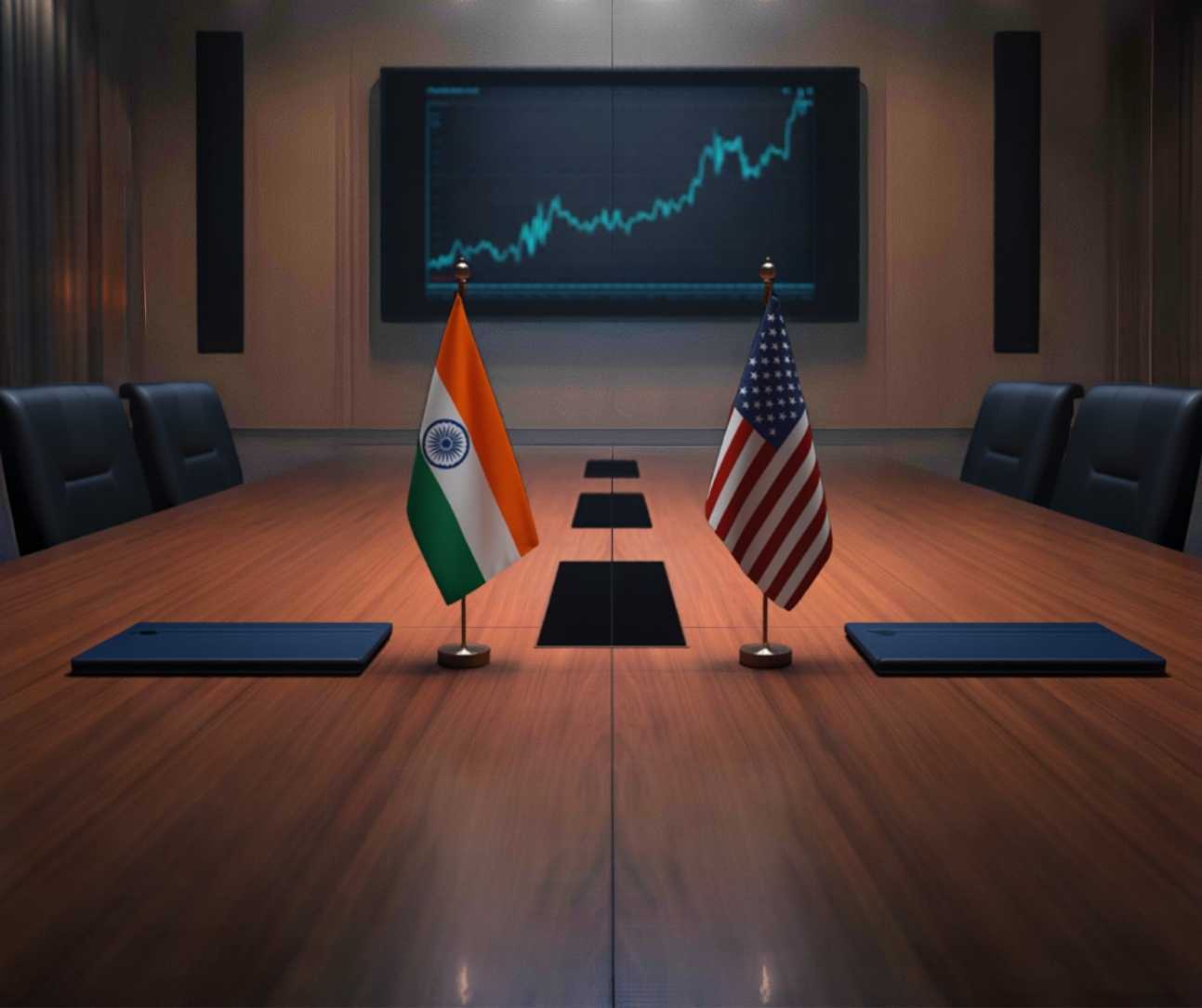
India US trade talks 2026 have reached a plateau, according to Finance Minister Nirmala Sitharaman, who said on Monday that both governments are running out of room to trade concessions. Speaking at an event in New Delhi, she called the deal a hard fought agreement and stressed that negotiations are still continuing.
Reuters described the remarks as New Delhi’s clearest public admission that talks have stalled. The two sides have been chasing a bilateral agreement since February 2025, with the goal of deepening economic ties and settling difficult market access questions.
Here is the thing. Sitharaman said any further give and take would now be “very, very difficult” for both sides. That is a blunt message from a senior minister, and it follows U.S. Trade Representative Jamieson Greer’s statement last week that a deal was not imminent after he met Indian Trade Minister Piyush Goyal in the United States.
Trade Flows and Oil Import Data
The numbers explain why neither side wants to walk away. The United States remains India’s largest export destination. Indian official data cited by Reuters shows goods shipments to the U.S. rose to $42.79 billion between April and August, up from $40.39 billion a year earlier, a gain of roughly 6%.
Sitharaman argued that the trade balance favors India and that the deficit sits on the American side. In her view, that is why Washington wants to shrink the imbalance.
Oil is the harder variable. Kpler data cited by Traders Union shows India imported 2.08 million barrels per day of Russian crude in August 2026, about 45% of its total crude purchases. Separately, the Centre for Research on Energy and Clean Air estimates that China took 50% and India 37% of Russia’s crude exports between December 2022 and August 2026.
Here is why those figures matter. India sits at the center of a new U.S. sanctions law, and its energy mix leaves little room for a quick change of course.
Why It Matters
President Donald Trump signed the Lindsey O. Graham Sanctioning Russia and Iran Act of 2026 on September 18, according to a White House statement reported by the Press Trust of India. The Senate passed the bill 86 to 11, and the House approved the final version 262 to 159.
The law authorizes tariffs of up to 100% on goods from the largest buyers of Russian oil and gas. PTI reports that it targets the top five purchasers by volume over the prior 12 months, that the president keeps wide discretion over which countries are hit, at what rate, and whether waivers apply, and that it takes effect within 30 days of signing. A Democratic amendment from Representative Steny Hoyer reportedly names ten countries for possible action, including India and China.
But wait. The 100% figure is a ceiling, not an automatic tariff, as Outlook Business notes. Still, the threat alone narrows the space for compromise. Reuters reports that it leaves Prime Minister Narendra Modi in an energy policy bind. Cutting Russian purchases could lift domestic fuel prices or strain government finances, while keeping them risks damaging exports to India’s biggest market. India has said it will keep diversifying its oil sources while warning that the measures could harm ties with Washington.
Global markets move fast. Stay ahead of every rate decision, price move, and market shifting event as it happens.
👉 Follow Daily Finance News at DF.Media
Expert Analysis and Reaction
Ajay Srivastava, founder of the New Delhi think tank Global Trade Research Initiative and a former trade official, argued that India should stop offering concessions while the deal remains unfinished. His comment mirrors the finance minister’s message that room for compromise is thin.
Sitharaman also pushed back on the wider use of tariffs. She said levies aimed at fixing trade imbalances have gone beyond being a negotiating tool, and she pointed to India’s own lopsided deficit with China as a case where New Delhi prefers talks over penalties. Her point was that every country faces imbalances, and the answer is negotiation, not punishment.
Kerala Kaumudi reported that Washington is expected to press India to sharply cut its Russian purchases while possibly avoiding a direct trade clash, since it views India as a strategic partner against China. Officials have not confirmed that reading.
What Investors and Traders Need to Know
Markets do not need talks to collapse to reprice risk. A stalled deal combined with live tariff authority raises uncertainty for Indian exporters that depend on the U.S. market, including electrical machinery, which Traders Union flagged as exposed. Refiners and oil marketing companies face a separate question about crude sourcing costs if Russian barrels become harder to buy.
Currency and bond traders will watch how any energy shift affects India’s import bill and fiscal position, since Reuters noted that government finances are part of the dilemma. Equity investors should track statements from India’s Commerce Ministry and the U.S. Trade Representative for signs of movement.
Here is the thing. Nothing in this week’s news confirms new tariffs on India. What it confirms is that a quick deal looks unlikely, and headline risk is likely to stay elevated until Washington signals how it will use its new powers.
What Comes Next for India US Trade Talks 2026
The first checkpoint is the law’s 30 day effective window, which points to mid October based on the September 18 signing date reported by PTI. After that, attention turns to which countries the administration names and at what rates.
Talks are expected to continue, since Sitharaman said negotiations are ongoing, but Greer’s comment last week suggests no signing is near. A shift by either side on market access or Russian oil would be the clearest sign of a breakthrough.
Key Takeaways
Finance Minister Sitharaman says India US trade talks have plateaued and that further concessions would be very difficult. Negotiations have run since February 2025 without a final deal. Indian goods exports to the U.S. rose to $42.79 billion from April to August. Russian crude made up about 45% of India’s August imports, per Kpler. A new U.S. law allows tariffs of up to 100% on top buyers of Russian energy, with wide presidential discretion.
This story is moving fast. Get every update, analysis, and market reaction as it happens.
👉 Follow Breaking Finance News at DF.Media
FAQ
What did Nirmala Sitharaman say about India US trade talks?
She said talks have reached a plateau and that further concessions would be very difficult for both sides, though negotiations are continuing, according to Reuters on October 5, 2026.
When did India and the US start negotiating a trade deal?
The two countries have been pursuing a bilateral agreement since February 2025, per Reuters.
What is the new US law on Russian oil buyers?
The Lindsey O. Graham Sanctioning Russia and Iran Act of 2026, signed September 18, authorizes tariffs of up to 100% on top buyers of Russian oil and gas, according to PTI.
Will the US impose 100% tariffs on India?
Not automatically. The rate is a ceiling, and the administration has wide discretion over countries, rates, and waivers, per Outlook Business and PTI.
How much Russian oil does India import?
Kpler data cited by Traders Union puts August 2026 imports at 2.08 million barrels per day, about 45% of India’s crude purchases.
How much did India’s goods exports to the US grow?
Shipments rose to $42.79 billion from April to August, from $40.39 billion a year earlier, per Indian official data cited by Reuters.
This article is for informational purposes only and does not constitute financial advice. Always conduct your own research before making any investment decisions.
Sources: Reuters (Shivangi Acharya), Oct 5, 2026; Press Trust of India, Sept 19, 2026; Outlook Business, Sept 2026; Traders Union (Kpler and CREA data), Sept 2026; Kerala Kaumudi, Sept 19 and 20, 2026