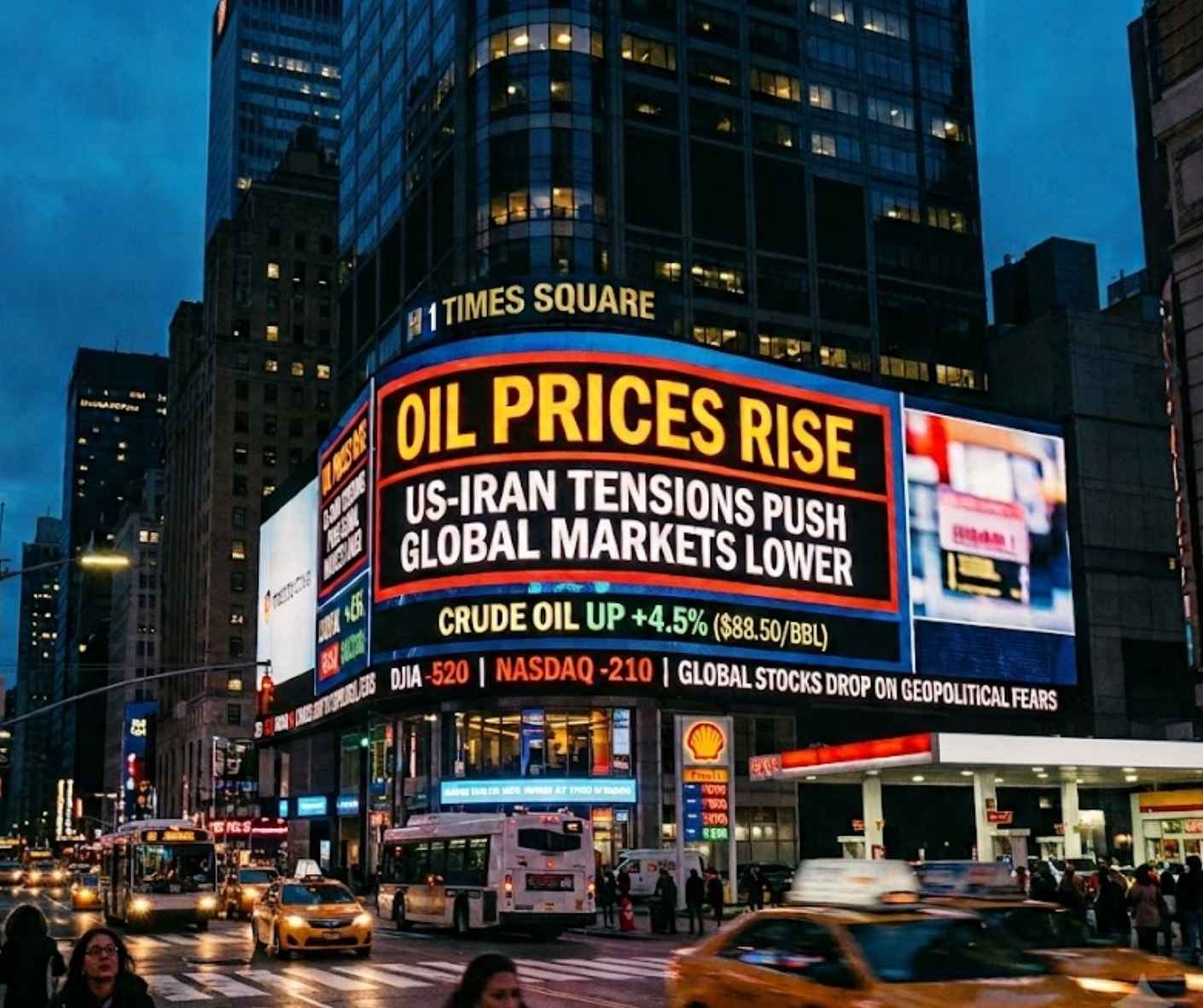
Oil prices climbed on Tuesday, September 1, 2026, as renewed US-Iran tensions raised concerns about energy supplies and a wider escalation of the Iran conflict. Crude oil gained around 1.5%, extending the previous session’s increase of more than 2%.
At the same time, global stock markets mostly moved lower as investors assessed the potential economic impact of higher energy costs, renewed geopolitical risks and inflation ahead of the next US Federal Reserve policy meeting.
The Strait of Hormuz remains the biggest concern for energy markets because prolonged disruption in the strategic waterway could affect global oil supplies and send crude prices significantly higher.
Why Are Oil Prices Rising?
The latest increase in oil prices is largely linked to renewed military activity between the United States and Iran.
The United States reportedly carried out strikes on Iran’s Larak Island on Sunday. US officials said the operation targeted rocket launchers and was intended to prevent Iran from placing mines in the Strait of Hormuz.
Iran responded by targeting US military positions in Jordan and the United Arab Emirates.
The exchange of attacks came after several weeks of relative calm, increasing fears that the Iran conflict could enter another period of escalation.
US President Donald Trump has warned that Washington would respond strongly to further Iranian action.
For oil traders, the key issue is whether the latest confrontation remains limited or develops into a broader conflict capable of disrupting energy transportation.
Why Is the Strait of Hormuz Important?
The Strait of Hormuz is a strategically important waterway connecting the Persian Gulf with the Gulf of Oman and international shipping routes.
Any prolonged disruption could have significant consequences for the global economy.
A major disruption could lead to:
- Higher crude oil prices
- Increased gasoline and diesel costs
- Higher shipping expenses
- Greater inflationary pressure
- Increased manufacturing costs
- Pressure on airline and transportation businesses
- Changes in central bank interest-rate expectations
This is why investors are closely monitoring developments around the waterway.
Even the possibility of prolonged disruption can cause traders to price additional geopolitical risk into energy markets.
How Much Have Oil Prices Increased?
Both major crude oil benchmarks gained approximately 1.5% on Tuesday, following increases of more than 2% during the previous trading session.
The consecutive gains indicate that traders are becoming increasingly concerned about the potential impact of renewed US-Iran tensions on global energy supplies.
However, the longer-term direction of oil prices will depend on whether the situation escalates further.
A diplomatic breakthrough could reduce the geopolitical premium currently reflected in crude prices. Further military action or disruption to shipping could have the opposite effect.
How Could the Iran Conflict Affect Inflation?
The Iran conflict could increase inflation if it causes oil prices to remain elevated for an extended period.
Crude oil affects a wide range of industries. Higher energy costs can increase transportation, manufacturing, logistics and production expenses.
Businesses may eventually pass some of these additional costs on to consumers.
That creates a difficult environment for central banks because higher energy prices can slow economic growth while simultaneously increasing inflation.
For investors, the combination of higher inflation and weaker growth is particularly concerning.
What Are US Officials Saying About Iran?
The Trump administration is continuing to apply both economic and strategic pressure on Tehran.
US Treasury Secretary Scott Bessent said Washington would continue exerting pressure on Iran and indicated that the campaign could reach an important turning point within weeks or months.
The administration has increasingly focused on economic pressure alongside military deterrence.
The latest exchange of attacks, however, demonstrates that the risk of further escalation remains.
Markets are therefore watching for signs of renewed negotiations as well as any additional military activity.
Why Are Global Stock Markets Falling?
Global stock markets mostly declined on Tuesday as investors reacted to geopolitical uncertainty and higher oil prices.
Asian markets including Tokyo, Hong Kong, Shanghai, Sydney, Singapore, Mumbai, Bangkok and Wellington moved lower.
However, Seoul, Taipei, Manila and Jakarta recorded gains.
European markets were also mixed.
London stocks declined after reopening following a long weekend, while Frankfurt also moved lower. Paris edged higher.
The market reaction reflects concerns that sustained increases in energy prices could affect corporate earnings, consumer spending and economic growth.
What Does the US-Iran Conflict Mean for Investors?
The main concern for investors is the possibility of a prolonged energy shock.
If US-Iran tensions remain elevated but shipping through the Strait of Hormuz continues without major disruption, markets may eventually stabilise.
However, a significant interruption to energy transportation could produce a much stronger reaction.
The potential chain reaction is straightforward:
US-Iran tensions → energy supply concerns → higher oil prices → increased inflation → pressure on interest rates → potential weakness in global stock markets.
The actual impact will depend on the severity and duration of any disruption.
What Is Trump Doing About US Gas Prices?
Higher energy prices are also becoming an important issue in the United States.
President Trump is expected to meet oil refining executives as his administration looks for ways to address rising domestic gasoline prices.
The issue could become increasingly significant ahead of the November US midterm elections.
The administration therefore faces a delicate balancing act: maintaining pressure on Iran while attempting to prevent geopolitical tensions from driving US fuel prices substantially higher.
What Happens Next for Oil Prices?
The direction of oil prices will depend heavily on developments surrounding the Iran conflict and the Strait of Hormuz.
Three possible scenarios are being watched by markets:
1. Diplomatic De-escalation
If Washington and Tehran return to meaningful negotiations, geopolitical risk could decline and oil prices could come under pressure.
2. Continued Limited Conflict
If military exchanges remain contained, oil markets could remain volatile while traders assess the risk of further escalation.
3. Major Escalation
A broader conflict or serious disruption to the Strait of Hormuz could create a much larger energy-market shock and push crude prices significantly higher.
What Should Investors Watch This Week?
Investors are likely to focus on several developments:
- New US-Iran military activity
- Conditions around the Strait of Hormuz
- Crude oil price movements
- US inflation data
- Employment and economic indicators
- Federal Reserve interest-rate expectations
- US gasoline prices
- Developments in Iran-related negotiations
The Federal Reserve’s September 16 meeting is particularly important because policymakers will be assessing the latest inflation and economic data.
Frequently Asked Questions
Why are oil prices rising today?
Oil prices are rising because renewed US-Iran tensions have increased concerns about potential disruptions to energy supplies and shipping through the Strait of Hormuz.
Why is the Strait of Hormuz important to oil markets?
The Strait of Hormuz is a major energy transportation route. Any prolonged disruption could reduce the flow of oil to international markets and increase crude prices.
Are global stock markets falling because of the Iran conflict?
The Iran conflict is one of the factors affecting global stock markets. Investors are also responding to higher oil prices, inflation concerns and uncertainty about interest rates.
Could US-Iran tensions increase inflation?
Yes. If US-Iran tensions cause oil prices to remain high, higher transportation and production costs could increase inflationary pressure.
Will oil prices continue to rise?
Oil prices could remain volatile. Further escalation around the Strait of Hormuz could push prices higher, while diplomatic progress could reduce the geopolitical risk premium.
When is the next Federal Reserve meeting?
The Federal Reserve’s next policy meeting is scheduled for September 16, 2026. Investors will be watching inflation and economic data ahead of the meeting.
Key Takeaways
- Oil prices gained around 1.5% on September 1, extending the previous day’s rally.
- Renewed US-Iran tensions have increased concerns about global energy supplies.
- The Strait of Hormuz remains a critical risk for international oil markets.
- The Iran conflict could increase inflation if energy prices remain elevated.
- Global stock markets mostly declined as investors assessed geopolitical and economic risks.
- The Federal Reserve’s September 16 meeting could provide another major market catalyst.
- US gasoline prices are becoming an increasingly important economic and political issue.