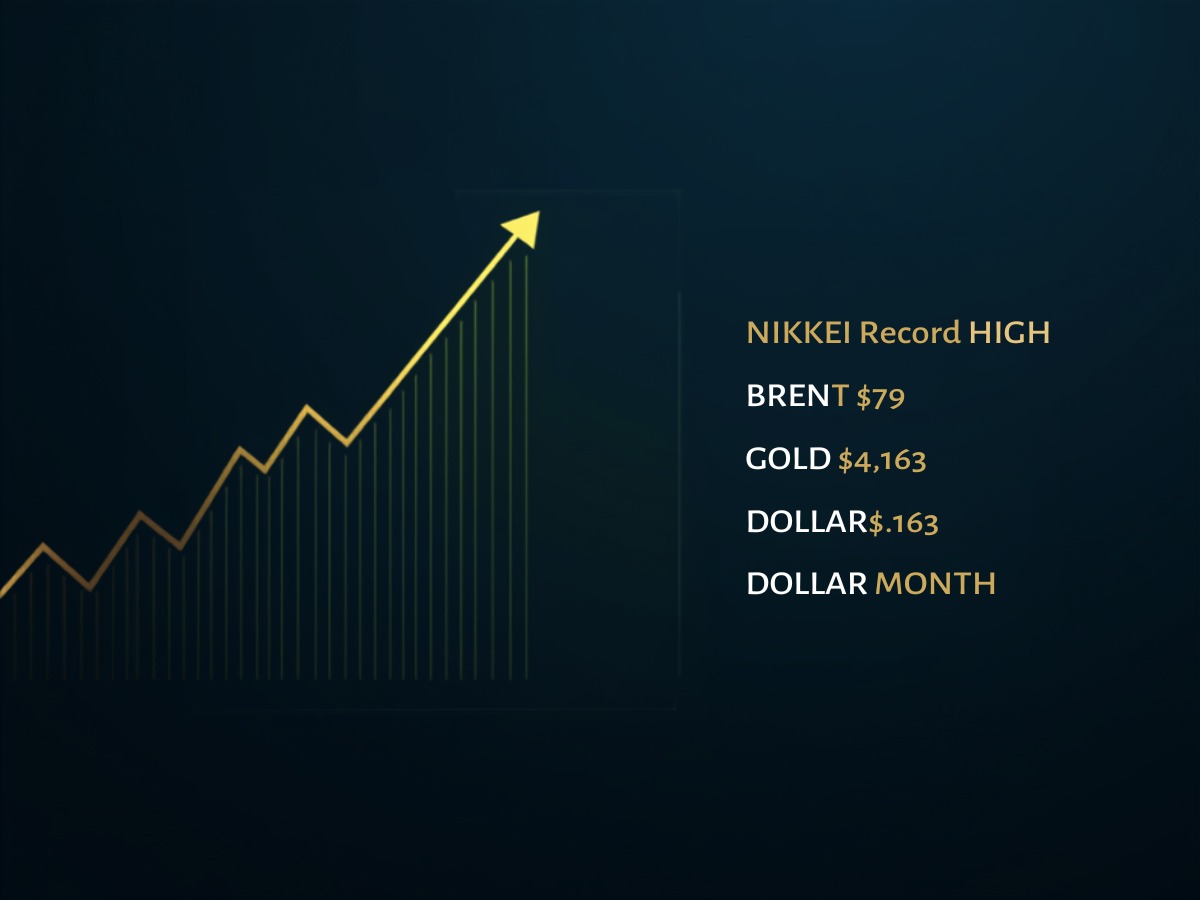
Markets today June 19, 2026 delivered a remarkable divergence across global asset classes. Stocks surged to record highs across Japan and South Korea as oil tankers resumed transit through the Strait of Hormuz, pushing the Brent crude price below $80 for the first time in months. A hawkish pivot from the Federal Reserve drove the dollar index to a 13-month high, sent gold to its third consecutive weekly loss, and pushed the yen to its weakest since July 2024. Here is the complete global scorecard for Friday, June 19, 2026. For context on last week’s Iran deal that triggered the initial market surge, see our Markets Today June 15 analysis.
Stock Markets Today June 19: Nikkei and KOSPI Hit All-Time Records
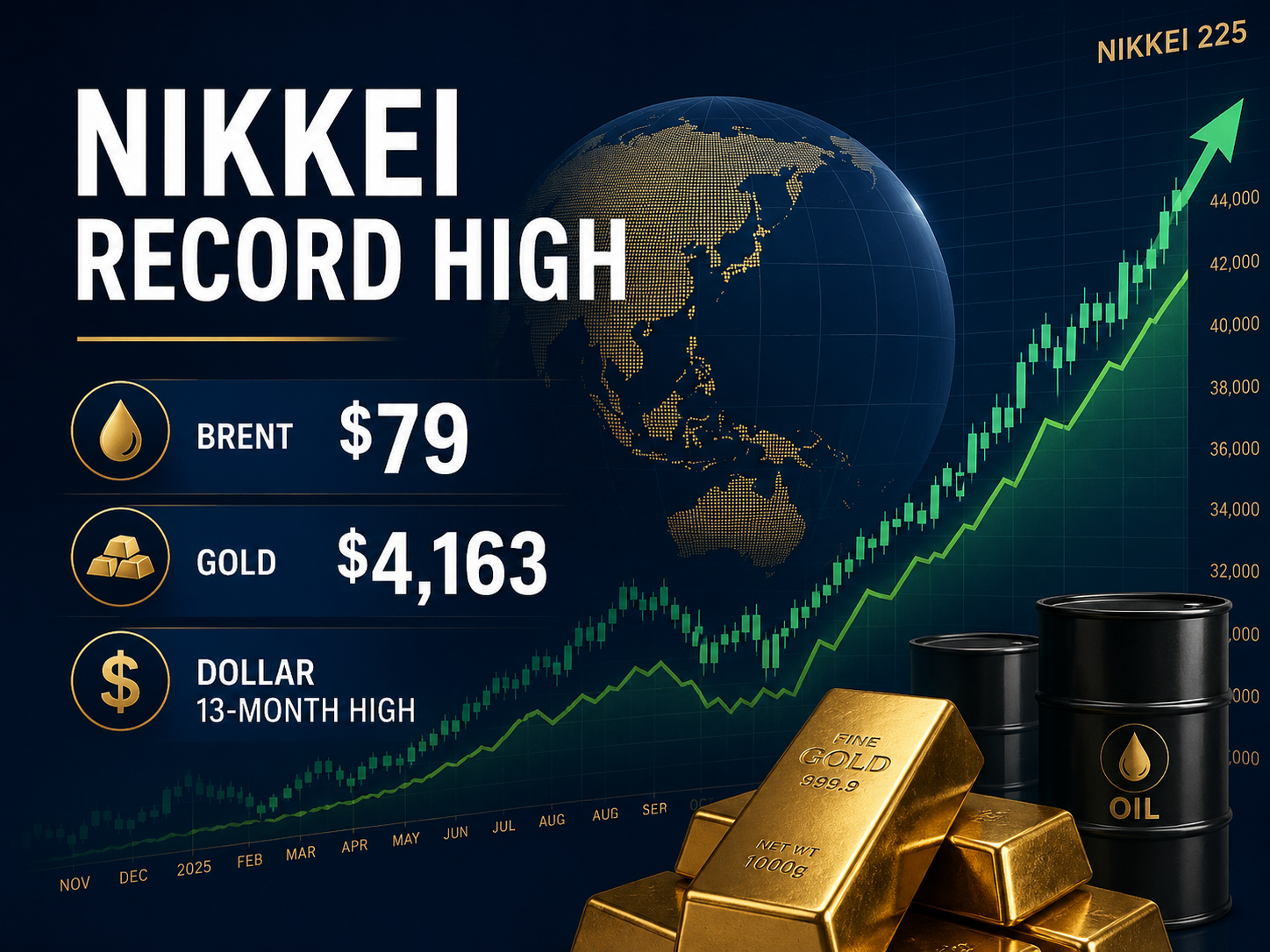
Japan’s benchmark Nikkei 225 index rose 0.8% on Friday to close at a new all-time high, marking the fifth consecutive record session. The Nikkei gained 8.5% this week alone — its strongest weekly performance in several years. The rally was driven by three converging forces: the collapse in oil prices from the Hormuz reopening, which cuts energy costs for Japanese manufacturers; easing inflation expectations that reduce pressure on the Bank of Japan to tighten policy; and a sharply weaker yen, which inflates the yen-denominated earnings of Japan’s major exporters including Toyota, Sony, and Softbank.
In South Korea, the KOSPI index surged 3.1% on Friday for a stunning 15.3% weekly gain — one of its best single-week performances on record. South Korea’s economy benefits doubly from lower oil: it is the world’s fifth-largest oil importer, and its key exports semiconductors, shipbuilding, and petrochemicals all benefit from lower feedstock costs. Samsung Electronics and SK Hynix both saw strong gains, underpinned by AI-chip demand momentum and relief from tariff uncertainty.
Mainland China, Hong Kong, and Taiwan were closed on Friday for the Dragon Boat Festival public holiday. Markets will reopen Monday. US stock futures edged down 0.2% with cash Treasuries also closed for the Juneteenth federal holiday. The standout equity story from the US overnight session was Intel Corporation, whose shares surged 10% to a record high after President Trump confirmed that Apple had agreed to work with Intel to design and manufacture chips domestically in the United States.
What Is the Oil Price Today?
The Brent crude price stands at $79.03 per barrel, down 1.0% on Friday and down a dramatic 9.5% for the week. US West Texas Intermediate crude fell to $76.43 per barrel, with the front-month July contract due to expire on Monday. Both benchmarks are now trading below the $80 psychological level that OPEC+ has historically defended with production cuts.
The collapse in oil prices followed the signing of a US-Iran interim peace deal on Thursday. Within hours of the agreement, oil tankers including three Saudi Aramco supertankers carrying an estimated 6 million barrels of crude began sailing through the Strait of Hormuz the narrow waterway through which roughly 20% of the world’s seaborne oil passes.
According to Reuters, analysts estimate that more than 85 million barrels of oil stranded in tankers awaiting safe passage will now flood back into the global market. The lifting of US sanctions on Iranian oil exports is expected to add a further estimated 1.5 million barrels per day to supply. Kuwait Petroleum Corporation lifted all force majeure notices. Iraq’s Oil Minister confirmed oilfields were ready to resume production at pre-disruption rates.
However, the outlook carries risks. US Vice President JD Vance pulled out of planned follow-on talks in Switzerland with Iranian negotiators, raising questions about the deal’s political durability. Israel continued military operations against Hezbollah in Lebanon. Any renewed escalation could quickly re-price the geopolitical premium back into oil.
“Traders are still waiting for hard evidence that tanker traffic through the Strait of Hormuz is actually normalising before committing to the next leg lower,” said Tim Waterer, chief market analyst at KCM Trade. “Future governance of the Strait will be led by Iran and Oman, creating scope for Iran to impose a maritime service fee — a potential hidden cost the market hasn’t priced yet,” added Madison Cartwright, senior geo-economics analyst at Commonwealth Bank of Australia.
What Is the Gold Price Today?
The gold price today fell 1.1% to $4,163.93 per troy ounce, putting gold on course for its third consecutive weekly decline with a 1.3% weekly loss. US August gold futures fell a sharper 1.5% to $4,181.20. Despite the pullback from its all-time high above $4,500, gold remains up significantly for 2026, driven by safe-haven demand, central bank buying, and earlier US dollar weakness before the Fed’s June pivot.
Goldman Sachs cut its December 2026 gold price target to $4,900 per ounce from its previous estimate of $5,400. The bank cited two main reasons: it no longer expects any Federal Reserve rate cut in 2026, and now sees the risk of a rate hike as material. The broader precious metals complex also sold off sharply. Silver dropped 2.2% to $64.36 per ounce. Platinum lost 1.9% to $1,663.03. Palladium fell 1.6% to $1,258.04. All four metals are on track for weekly losses.
“Gold’s rally on the US-Iran peace deal proved short-lived. The resurgent dollar, powered by the Fed’s newly hawkish tone under Kevin Warsh, has stolen the spotlight,” said Tim Waterer. “The new chairman’s firm stance on price stability has neutralised the geopolitical tailwind and reminded traders that monetary policy still sets the direction for gold over the medium term.”
Why Is the Dollar Index at a 13-Month High?
The US dollar index today stands at 100.78, up 1.0% for the week and at its highest level in 13 months. The dollar’s strength reflects a sharp repricing of Federal Reserve rate expectations following Wednesday’s June FOMC policy decision, where nine of the Fed’s 19 policymakers signalled they expect to raise rates at least once more this year.
New Fed Chair Kevin Warsh vowed to deliver price stability and showed no inclination to bow to political pressure for cuts. According to the CME FedWatch Tool, traders now price an 87% probability of at least one US rate hike by December 2026, sharply up from 61% before the meeting. Two-year Treasury yields rose 9 basis points over the week to 4.179%. Ten-year yields fell 3 bps to 4.451% and 30-year yields dropped 7 bps to 4.901%.
The yield curve flattening reflects a dual signal: markets believe the Fed will hike near-term but also trust that tightening will successfully contain inflation. “The curve remained notably flatter than before the meeting, reflecting higher expected near-term policy rates and firmer confidence in the Fed’s inflation-fighting credibility,” said Molly Nickolin, strategist at Morgan Stanley.
Is Japan About to Intervene in the Currency Market?
Japan’s yen weakened to 161.26 per dollar on Friday, its softest level since July 2024 and well beyond the 160 per dollar level widely regarded as Japan’s informal intervention threshold. Japanese authorities have intervened to support the yen multiple times since 2022, spending hundreds of billions of yen defending the currency near current levels. With USD/JPY now through 161, speculation about a new intervention episode is intensifying.
The yen’s weakness is a direct consequence of the interest rate differential between the US and Japan. While the Fed is signalling hikes, the Bank of Japan remains far below US rates and faces domestic pressure to keep conditions accommodative. A stronger dollar mechanically weakens the yen, and until the rate differential narrows, verbal intervention — and potentially the real thing — remains the most likely Japanese policy response.
Elsewhere, the British pound fell 0.1% to $1.3195 after a 0.7% drop following the Bank of England’s 7-2 vote to hold rates at its June meeting. The cautious BoE stance, combined with dollar strength, weighed on sterling.
Full Global Markets Scorecard
| Asset | Level | Day Change | Weekly Change |
|---|---|---|---|
| Nikkei 225 (Japan) | Record High | +0.8% | +8.5% |
| KOSPI (South Korea) | Record High | +3.1% | +15.3% |
| US Futures (S&P 500) | Near flat | -0.2% | Closed Fri |
| Intel Corp | Record High | +10.0% | New High |
| Brent Crude | $79.03/bbl | -1.0% | -9.5% |
| WTI Crude | $76.43/bbl | -0.2% | -9.0% |
| Spot Gold | $4,163.93/oz | -1.1% | -1.3% |
| Spot Silver | $64.36/oz | -2.2% | Negative |
| Dollar Index (DXY) | 100.78 | Flat | +1.0% |
| USD/JPY (Yen) | 161.26 | Yen weaker | 13-month high $ |
| GBP/USD (Pound) | $1.3195 | -0.1% | -0.8% |
| 2-Year Treasury Yield | 4.179% | +2 bps | +9 bps |
| 10-Year Treasury Yield | 4.451% | Flat | -3 bps |
| 30-Year Treasury Yield | 4.901% | Flat | -7 bps |
What to Watch Next Week
Several key catalysts could move markets significantly when trading resumes on Monday. First, tanker traffic data from the Strait of Hormuz will either confirm or challenge oil’s selloff. If the 85+ million barrels of stranded oil begin arriving at Asian and European refineries as expected, Brent could test $75. If political disruptions delay transit, a swift rebound toward $85 is possible.
Second, Japanese authorities may intervene in currency markets if USD/JPY continues above 161. Japan’s Ministry of Finance has previously drawn red lines at 150, 155, and 160 — all of which gave way. The 160-165 range is now the live battleground. Any confirmed intervention will trigger sharp yen volatility and could reverse some of the Nikkei’s gains.
Third, watch China when mainland and Hong Kong markets reopen Monday after the Dragon Boat Festival. Given the scale of gains in Japan and Korea this week, Chinese equities could see a catch-up rally — particularly if the People’s Bank of China signals further liquidity support.
Frequently Asked Questions
Why is the Nikkei at a record high today?
The Nikkei hit a record high for the fifth straight session, driven by lower oil prices from the US-Iran peace deal reducing energy import costs, easing inflation fears allowing the Bank of Japan to stay accommodative, and a weaker yen boosting the earnings of Japan’s major exporters like Toyota, Sony, and Nintendo in yen terms.
Why is the gold price falling today?
Gold is falling because the US dollar surged to a 13-month high after the Federal Reserve signalled rate hikes, with nine policymakers backing at least one US rate increase in 2026. A stronger dollar makes gold more expensive for overseas buyers and reduces its appeal versus interest-bearing assets like Treasury bonds, which now offer higher yields.
Why is the Brent crude price below $80 today?
Brent crude fell below $80 as oil tankers resumed passage through the Strait of Hormuz following the US-Iran peace deal. Analysts expect over 85 million barrels of stranded oil to re-enter global supply, and the lifting of US sanctions on Iranian exports will add a further estimated 1.5 million barrels per day of supply capacity to the market.
What is the probability of a Fed rate hike in 2026?
Markets price an 87% probability of at least one Federal Reserve rate hike by December 2026, up from 61% before the June FOMC meeting, per CME FedWatch data. Nine of 19 policymakers backed higher rates, and new Chair Kevin Warsh has signalled a firm commitment to price stability.
Will Japan intervene to defend the yen?
Japan has not confirmed intervention but the yen at 161.26 per dollar is beyond the 160 threshold widely seen as a trigger. Japan intervened multiple times in 2022-2024 at similar levels. Currency traders are watching closely for any Tokyo statement or confirmed Bank of Japan action, which could trigger a sharp yen reversal.
Stay ahead of global markets every day.
Breaking financial news, real-time data and expert analysis — all on Daily Finance.