It has been a busy morning in global markets. Washington dropped a fresh tariff bombshell, Bitcoin hit a milestone, and central banks continued doing what they do best keeping everyone guessing. If you are trying to make sense of what is happening with your money, your portfolio, or just the economy in general, here is everything you need to know.
Washington Just Made Trade Complicated Again
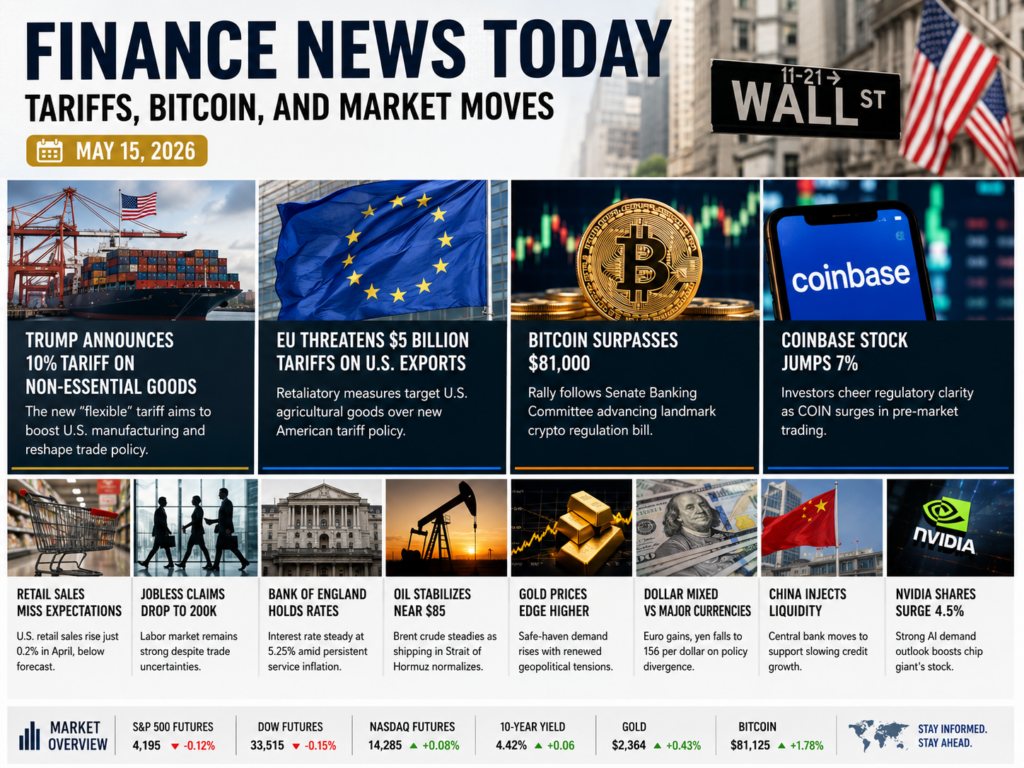
Let us start where the real action is. The Trump administration announced a new 10% tariff on non-essential manufactured goods from across the globe. The White House called it flexible and temporary. Traders called it something else entirely.
Within hours, the European Union fired back. Brussels is threatening retaliatory tariffs on $5 billion worth of American agricultural goods, arguing the move breaks WTO rules. Germany’s Chancellor got involved too, pushing for a unified European response before next week’s G7 finance ministers meeting. That meeting just got a lot more interesting.
The US and China are still trying to patch things up from years of trade war, but the numbers tell the real story. American tariffs on Chinese goods are still sitting close to 48%. That is not a trade relationship healing at any great speed. And the long-term reshuffling of supply chains is now a fact, not a forecast. Mexico and Canada have officially become America’s top two trading partners, leapfrogging China entirely.
Bitcoin Had a Very Good Morning
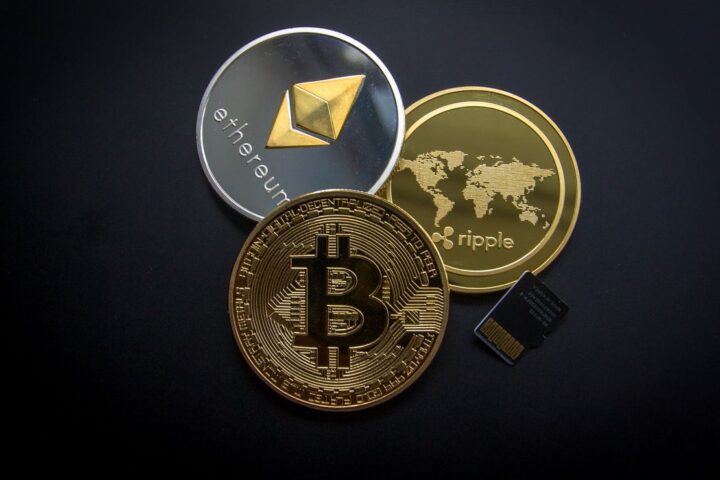
Crypto investors woke up to good news. Bitcoin crossed $81,000 after the US Senate Banking Committee pushed forward the Clarity Act, a bill that would hand the CFTC primary regulatory authority over certain digital assets. For a market that has been crying out for regulatory clarity for years, this felt like progress.
Coinbase jumped 7% in pre-market trading. Investors clearly read the committee vote as a sign that the worst of the regulatory uncertainty for crypto platforms may be behind us. Ethereum climbed 2.5% alongside Bitcoin, riding the same wave of optimism.
By mid-session, Bitcoin had slipped back to around $80,481 after running into resistance near $81,500. But the mood in crypto remains positive. One Senate committee vote does not change everything overnight, but it changes the story.
The Bank of England Is Still Not Ready to Cut
Across the Atlantic, the Bank of England kept its key interest rate at 5.25%. The Monetary Policy Committee pointed to stubborn inflation in the services sector as the main reason for holding firm. Anyone hoping for hints of a summer rate cut went home disappointed.
The frustrating part is that the UK housing market showed an unexpected price rebound in April. Consumers are holding up better than a lot of analysts expected. But the central bank is not ready to declare victory on inflation yet, and until it does, borrowing costs are staying where they are.
NVIDIA Keeps Climbing
NVIDIA added another 4.5% today after a major data center client issued strong guidance. At this point, NVIDIA has become the single clearest signal of how serious the corporate world is about building AI infrastructure. When one of its big customers talks up spending, the stock moves. Today it moved up again.
Emerging market equities had a solid session too. India and Brazil both outperformed their global peers, with money flowing into tech and infrastructure plays. It is worth watching. Emerging markets do not always get this kind of attention, and right now they are earning it.
The airline sector was a different story. One major US carrier cut its profit outlook citing high jet fuel costs and the stock dropped 3%. Oil may have stabilized near $85 per barrel today, but it is still high enough to hurt carriers with thin margins.
The US Economy is Sending Conflicting Signals
The labor market data was good. Initial Jobless Claims fell to 200,000, which is historically very low. The American job market is still tight, and that pushed Treasury yields a little higher as bond traders concluded the Fed has less reason to rush any rate cuts.
Then came the retail sales number. Spending rose just 0.2% in April, well below what economists expected. That kind of miss matters because consumer spending is what keeps the US economy moving. One soft month is not a crisis, but two or three in a row would start to raise questions.
Import prices also came in at 1.1% for the month, a touch above forecasts. Some of that is global inflation. Some of it is the effect of existing tariffs. Either way, prices on imported goods are not cooling off as fast as anyone would like.
Central Banks Are Running the Show
China’s central bank injected a significant amount of liquidity into its financial system today in response to slowing credit growth. The goal is simple: keep confidence up and keep the economy moving. Whether it works is a separate question.
Japan is sticking with ultra-loose monetary policy, which is hammering the Yen. It touched 156 per dollar today. Australia’s Reserve Bank hinted it will be cautious about cutting rates for longer than markets expected, and the Australian Dollar fell 0.6% on those comments. The Euro, meanwhile, had a good day after German sentiment data beat expectations, gaining 0.4% against the dollar.
Commodities: Crude Steadies, Gold Climbs
Brent crude settled near $85 per barrel after reports that shipping through the Strait of Hormuz has returned to normal. Supply fears eased. Gold moved in the other direction, ticking higher as investors reached for safety amid the renewed trade tensions between Washington and Brussels.
When tariff headlines start flying again, gold tends to find buyers. Today was no different.
What to Watch Next
The next 48 hours matter. The EU-US tariff standoff could escalate or cool depending on how Washington responds to Brussels. Crypto markets will be watching for any further movement on the Clarity Act. And the Fed will be quietly noting that retail sales missed while the labor market held strong. That is not an easy equation to solve.