Published: Thursday, 4 June 2026
Table of Contents
- Markets at a Glance — Thursday 4 June 2026
- Iran Conflict Rattles Investor Confidence
- Oil Eases After Israel-Lebanon Ceasefire News
- Bitcoin Crashes Below $63K — What Triggered the Sell-Off
- Analysts Weigh In — How Low Can Bitcoin Go
- SpaceX IPO and Broadcom Earnings Add to the Mix
- What to Watch Thursday — Jobs Data and Earnings
- Key Takeaways
- FAQ
Markets at a Glance — Thursday 4 June 2026
US stock futures are under pressure on Thursday, 4 June 2026, as two overlapping crises hit Wall Street simultaneously. A worsening geopolitical standoff between the United States and Iran and a sharp sell-off in cryptocurrency markets led by Bitcoin falling below $63,000 are driving a broad risk-off mood across global markets.
Futures tied to the Dow Jones Industrial Average hovered near the flatline in early Thursday trading. Contracts linked to the S&P 500 fell roughly 0.5%, while Nasdaq 100 futures declined around 0.6%, with technology stocks bearing the steepest losses of the session.
The moves follow a turbulent Wednesday session in which stocks retreated from record highs, oil surged, and a major political rupture emerged in Washington over the handling of the Iran conflict.
Iran Conflict Rattles Investor Confidence
The single biggest driver of Thursday’s market weakness is the Iran war. On Wednesday evening, 3 June 2026, the House of Representatives voted to end the US-Iran war in a direct rebuke to President Trump, reflecting deepening divisions in Washington over the administration’s handling of the conflict.
The vote came after what officials described as the most serious escalation between the two countries since the April ceasefire took effect. During Wednesday’s regular session, stocks had already pulled back from record highs as optimism over a swift Iran deal faded and oil prices rose sharply in response.
While the US and Iran have agreed on a rough framework to extend their truce by two months and reopen the Strait of Hormuz, talks over the final details are dragging on even as strikes continue on both sides. Iran’s foreign minister, quoted by the semi-official Tasnim news agency on Wednesday, stated that no tangible progress had been achieved in negotiations and warned that Iran was prepared to target objectives inside Israel if attacks on Beirut continued.
For markets, the core concern is simple. A prolonged Iran conflict means sustained oil supply disruption, persistent inflation risk, and an extended period of geopolitical uncertainty that historically weighs on equities, consumer sentiment, and global trade.
Global markets are moving fast. Stay ahead of every geopolitical event, rate decision, and price move as it happens. 👉 Follow Daily Finance News at DF.Media (https://df.media/)
Oil Eases After Israel-Lebanon Ceasefire News
Oil gave back some of its recent gains on Thursday morning after Bloomberg reported that Israel and Lebanon had agreed to a ceasefire. West Texas Intermediate fell toward $95 a barrel, having risen nearly 10% across the three prior sessions. Brent crude settled near $98 on Wednesday before the ceasefire news broke.
The US State Department confirmed that the agreement is contingent on a complete cessation of Hizbollah fire and the evacuation of all Hizbollah operatives from the South Litani Sector.
Despite the headline relief, the broader conflict between Washington and Tehran remains unresolved. Supply concerns are also intensifying independently of the ceasefire. US government data released on Wednesday showed that crude stockpiles at Cushing, Oklahoma, the delivery point for WTI, fell for a sixth consecutive week, approaching what is known as the minimum operating level. When Cushing inventories reach minimum operating levels, spot price volatility historically accelerates sharply.
Bitcoin Crashes Below $63K — What Triggered the Sell-Off
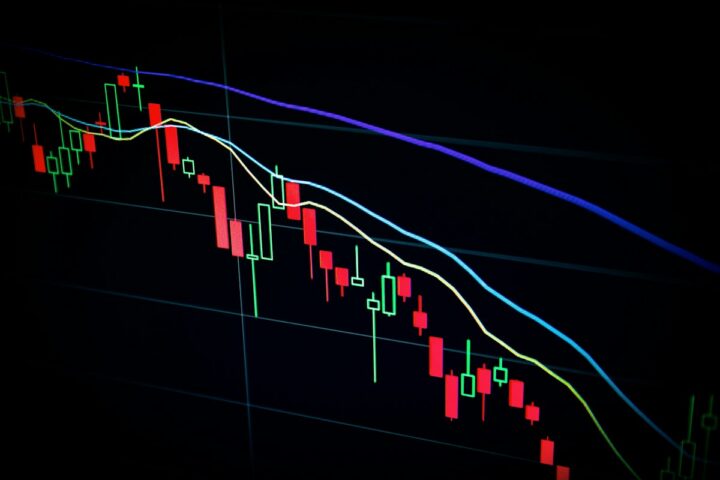
Away from the Iran headlines, cryptocurrency markets are experiencing their own crisis on Thursday, 4 June 2026. Bitcoin has fallen below $63,000, declining more than 8% over the past 24 hours and hitting its lowest level in months.
The sell-off was triggered earlier this week when digital asset treasury giant Strategy, formerly known as MicroStrategy and trading under the ticker MSTR, revealed it had sold 32 bitcoins. That sale marked Strategy’s first Bitcoin disposal since December 2022. Although the sale represented just a fraction of Strategy’s total holdings, the move rattled markets sharply. It represented a clear departure from the company’s long-standing aggressive buy-and-hold approach that has been a pillar of institutional Bitcoin confidence since 2020.
Strategy shares tumbled over 7% on Wednesday and extended those losses in overnight trading on Thursday. The sell-off triggered a wave of ETF outflows, which in turn added additional selling pressure across the broader crypto market. Speculation around Mt. Gox liquidations, reported by CoinDesk on Thursday, added further fuel to the decline.
Analysts Weigh In — How Low Can Bitcoin Go
Market analysts are divided on where Bitcoin goes from here, but the directional concern is clear across the board.
Trade Nation senior market analyst David Morrison flagged $65,000 as a critical support level for Bitcoin on Thursday. Morrison warned that a sustained break below that threshold would raise the likelihood of the token testing its February 2026 low of $60,000. Bitcoin is currently trading below that level, meaning the February floor is now the next major line of defence.
Compass Point analyst Ed Engel offered a more constructive longer-term read. Engel noted that 26% of Bitcoin sales over the past 30 days had come from investors who originally bought the token above $90,000. “This cohort of top-buyers had been resilient throughout the bear market; however, they are finally capitulating as BTC approaches new cycle lows,” Engel said in a note published Thursday. He added that the trend made him more confident that Bitcoin’s bear market is in its late stages.
Paul Howard, senior director at liquidity provider Wincent, told CoinDesk on Thursday that some analysts were beginning to discuss $50,000 as a potential bottom for the year. Peter Schiff, CEO of Euro Pacific Capital, issued a stark warning on X on Thursday morning, stating that Ethereum and Solana appeared in worse technical shape than Bitcoin and that selling, while orderly so far, looked likely to turn into panic.
Wall Street moved quickly to revise its outlook on Strategy. Canaccord analyst Joseph Vafi lowered his price target by more than 27%, from $224 to $163, while maintaining a Buy rating. Mizuho similarly cut its target from $320 to $265, maintaining an Outperform rating, while describing the current environment as a persisting crypto winter.
For deeper context on where crypto markets stand heading into this sell-off, read our full breakdown of the SpaceX IPO and what it means for digital asset markets in 2026.
Wall Street does not wait. Stay ahead of every market move, earnings surprise, and macro event that matters to your portfolio. 👉 Track Market Moves at DF.Media (https://df.media/)
SpaceX IPO and Broadcom Earnings Add to the Mix
Thursday’s session is not short of market-moving stories beyond Iran and Bitcoin. SpaceX confirmed in a new regulatory filing this week that it plans to raise $75 billion in an initial public offering that would be the largest in history. The company is targeting a $1.75 trillion valuation and a Nasdaq debut under the ticker SPCX around June 12, 2026. The roadshow formally begins Thursday, June 4.
Semiconductor giant Broadcom, trading under the ticker AVGO, also weighed on sentiment Thursday after its latest earnings release disappointed investors. The company’s projected AI chip sales fell short of market expectations, sending shares lower in pre-market trading and adding a sector-specific headwind for the Nasdaq.
What to Watch Thursday — Jobs Data and Earnings
Thursday’s session brings two additional readings on the US labour market ahead of Friday’s May jobs report. Weekly jobless claims from the Bureau of Labor Statistics and layoff data from outplacement firm Challenger, Gray and Christmas are both due before the opening bell on Thursday, 4 June 2026.
On the corporate earnings front, three notable companies are reporting results Thursday. Ciena Corporation, trading as CIEN, reports its latest quarterly numbers. Lululemon Athletica and DocuSign round out the earnings calendar for the session.
The May jobs report on Friday will be the week’s defining macro event. Any significant miss or beat on payrolls will reshape expectations for Federal Reserve policy heading into the second half of 2026, in an environment already complicated by oil price volatility and geopolitical risk.
Key Takeaways
US stock futures are lower on Thursday, 4 June 2026, with the S&P 500 down 0.5% and the Nasdaq 100 off 0.6% as Iran ceasefire talks stall and Bitcoin crashes below $63,000. The House of Representatives voted on Wednesday evening to end the US-Iran war in a rebuke to President Trump. Oil eased toward $95 a barrel after Israel and Lebanon agreed to a ceasefire, but supply concerns remain acute with Cushing stockpiles at near-minimum operating levels. Bitcoin fell more than 8% in 24 hours after Strategy sold 32 bitcoins, its first sale since December 2022. Analysts at Compass Point believe the Bitcoin bear market is in its late stages, while some are beginning to discuss $50,000 as a potential floor. SpaceX begins its formal IPO roadshow Thursday targeting a $75 billion raise and Broadcom disappointed on AI chip sales. Weekly jobless claims and earnings from Ciena, Lululemon, and DocuSign are all due Thursday ahead of Friday’s critical May jobs report.
FAQ
Q: Why are US stock futures falling on Thursday 4 June 2026? A: US stock futures are slipping on Thursday as doubts grow over the US administration’s ability to secure a ceasefire extension with Iran. The House of Representatives voted on Wednesday evening to end the war, reflecting deepening political divisions in Washington. At the same time, Bitcoin has crashed below $63,000, adding to the risk-off mood. (Source: Yahoo Finance, Reuters, June 4, 2026.)
Q: Why has Bitcoin dropped below $63,000? A: Bitcoin fell below $63,000 after digital asset treasury firm Strategy revealed it sold 32 bitcoins, its first sale since December 2022. The move triggered ETF outflows and broader crypto selling, with speculation around Mt. Gox liquidations adding further pressure. Bitcoin has declined more than 8% in the past 24 hours. (Source: CoinDesk, Yahoo Finance, June 4, 2026.)
Q: How low could Bitcoin go? A: Trade Nation analyst David Morrison is watching $60,000 as the next major support level following the break below $65,000. Some analysts, including Paul Howard at Wincent, have begun discussing $50,000 as a potential floor for the year. Compass Point’s Ed Engel believes the bear market is in its late stages based on capitulation patterns among top buyers. (Source: CoinDesk, Trade Nation, June 4, 2026.)
Q: What happened to oil prices on 4 June 2026? A: Oil eased on Thursday after Israel and Lebanon agreed to a ceasefire, with WTI falling toward $95 a barrel after a near 10% rise in the prior three sessions. However, crude stockpiles at Cushing, Oklahoma, fell for a sixth consecutive week to near minimum operating levels, keeping supply concerns elevated. (Source: Bloomberg, US EIA, June 4, 2026.)
Q: What is the SpaceX IPO date? A: SpaceX confirmed it plans to raise $75 billion in the largest IPO in history. The formal investor roadshow begins June 4, 2026, with final pricing targeted for June 11 and a Nasdaq debut under the ticker SPCX expected around June 12, 2026. (Source: Reuters, Bloomberg, June 2026.)
Q: What earnings are due Thursday 4 June 2026? A: Ciena Corporation, lululemon athletica, and DocuSign are all reporting earnings on Thursday. Weekly jobless claims and Challenger layoff data are also due before the opening bell, ahead of Friday’s May jobs report. (Source: Yahoo Finance, June 4, 2026.)
This article is for informational purposes only and does not constitute financial advice. Always conduct your own research before making any investment decisions.
Sources: Yahoo Finance, June 4, 2026 — Futures data and Iran market impact Bloomberg, June 4, 2026 — Israel-Lebanon ceasefire and oil prices Reuters, June 3, 2026 — SpaceX IPO confirmation CoinDesk, June 4, 2026 — Bitcoin sell-off, Strategy sale, Mt. Gox speculation Trade Nation / David Morrison, June 4, 2026 — Bitcoin $65K support level Compass Point / Ed Engel, June 4, 2026 — Bitcoin bear market late stages Wincent / Paul Howard, June 4, 2026 — $50K floor discussion Canaccord / Joseph Vafi, June 4, 2026 — Strategy price target cut $224 to $163 Mizuho, June 4, 2026 — Strategy price target cut $320 to $265 Tasnim News Agency, June 3, 2026 — Iran foreign minister statement US EIA, June 3, 2026 — Cushing crude stockpile data