Table of Contents
- Gold Prices Fall After Strong US Jobs Data
- Why Interest Rate Expectations Are Hurting Gold
- Oil Prices Surge on Renewed Middle East Conflict
- Rising Energy Costs Raise Inflation Concerns
- Precious Metals Face Broad Selling Pressure
- What Investors Are Watching Next
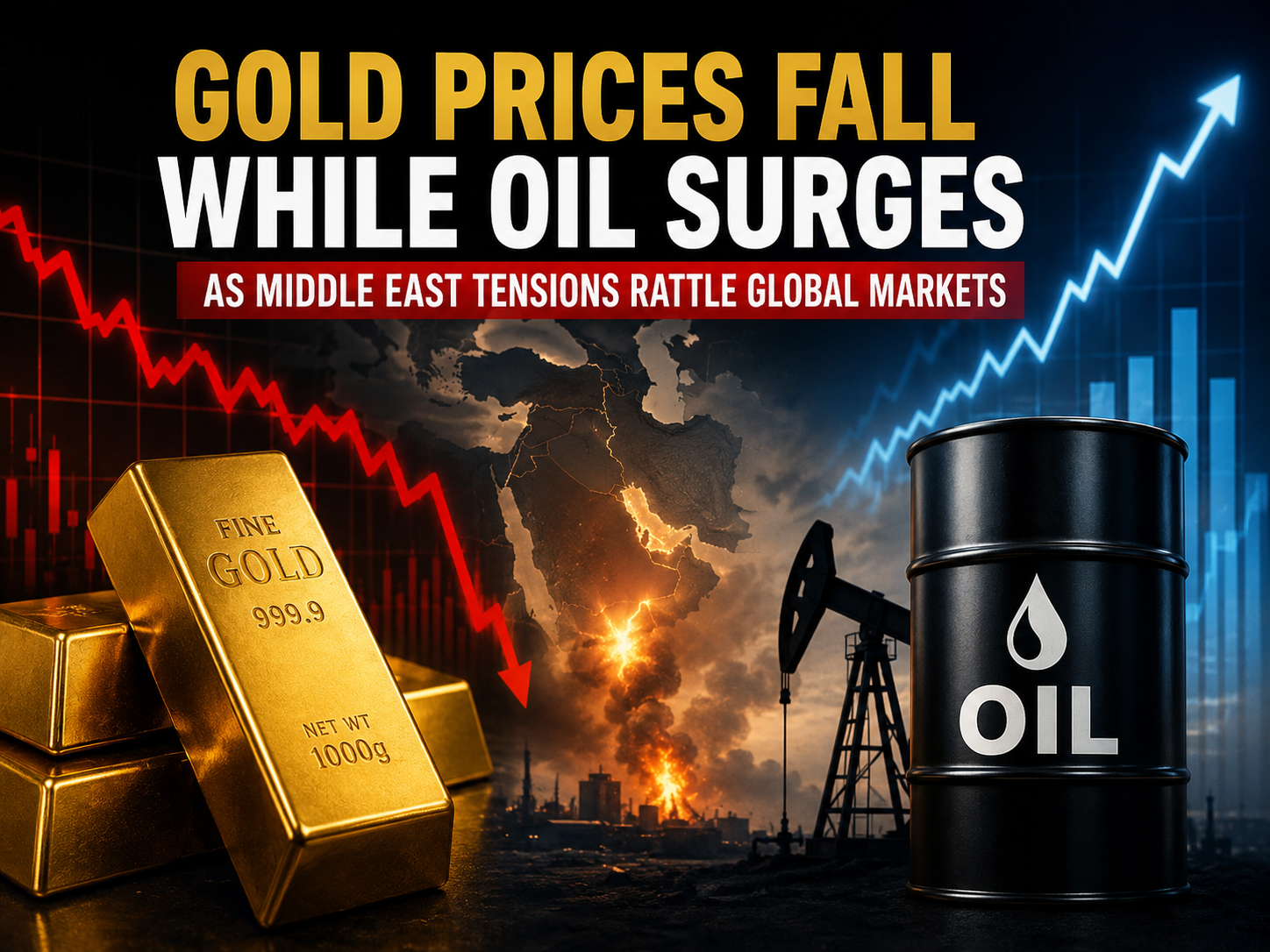
Gold Prices Fall While Oil Surges as Middle East Tensions Rattle Global Markets
Global commodity markets moved in opposite directions on Monday as gold prices declined while oil prices climbed sharply. Investors reacted to a combination of stronger-than-expected U.S. economic data, rising expectations for higher interest rates, and escalating tensions in the Middle East.
Gold, traditionally viewed as a safe-haven asset during times of uncertainty, failed to benefit from geopolitical risks. Instead, traders focused on the possibility that the U.S. Federal Reserve may keep monetary policy tighter for longer, putting pressure on precious metals.
Meanwhile, crude oil prices jumped after reports of renewed military activity in the Middle East raised concerns about global energy supplies.
Gold Prices Fall After Strong US Jobs Data
Gold extended losses after a stronger U.S. employment report showed that the American economy remains resilient despite rising energy costs and geopolitical uncertainty.
The United States added 172,000 jobs in May, significantly above market expectations. The data reinforced confidence in the labour market and prompted investors to reassess the likelihood of future Federal Reserve policy moves.
Following the report, financial markets increased their expectations for an interest rate hike later this year. Rising Treasury yields and a stronger U.S. dollar added further pressure on gold prices.
Because gold does not provide interest income, it often becomes less attractive when yields on bonds and other fixed-income investments rise.
Why Interest Rate Expectations Are Hurting Gold
The recent decline in gold reflects changing expectations around inflation and interest rates.
While inflation concerns would normally support demand for precious metals, investors are increasingly worried that persistent price pressures could force the Federal Reserve to maintain higher borrowing costs.
Higher rates generally strengthen the U.S. dollar and increase returns on interest-bearing assets. Both factors tend to reduce demand for gold.
As a result, market participants have shifted their focus from geopolitical uncertainty to monetary policy, creating a challenging environment for bullion.
Oil Prices Surge on Renewed Middle East Conflict
While gold struggled, oil prices moved sharply higher.
Brent crude rose more than $3 per barrel, while U.S. crude futures also posted strong gains. The rally followed reports of Israeli military strikes and renewed concerns about a broader regional conflict involving Iran.
Investors remain particularly focused on the security of energy supplies moving through the Strait of Hormuz, one of the world’s most important oil shipping routes.
Any disruption to oil exports from the region could tighten global supplies and drive energy prices even higher.
Although OPEC+ recently agreed to increase production, many analysts believe additional output may not be enough to offset supply risks if geopolitical tensions continue to escalate.
Rising Energy Costs Raise Inflation Concerns
The sharp increase in oil prices has renewed fears that inflation could accelerate in the coming months.
Higher energy costs affect transportation, manufacturing, logistics, and consumer spending. As businesses face rising expenses, those costs are often passed on to consumers through higher prices.
This creates a difficult challenge for central banks.
If inflation remains elevated because of rising oil prices, policymakers may have little choice but to keep interest rates higher for longer. That scenario is generally supportive for oil but can be negative for gold, especially when bond yields continue to rise.
Precious Metals Face Broad Selling Pressure
The weakness was not limited to gold.
Silver, platinum, and palladium also moved lower as investors reduced exposure to precious metals. The broader sector has come under pressure from a stronger U.S. dollar and growing expectations of tighter monetary policy.
Market participants are increasingly favouring assets that benefit from higher interest rates while reducing positions in non-yielding commodities.
What Investors Are Watching Next
Investors are closely monitoring developments on two fronts.
The first is the evolving situation in the Middle East. Any escalation that threatens energy infrastructure or oil shipments could create further volatility across commodity markets.
The second is the outlook for U.S. interest rates. Upcoming inflation reports, Federal Reserve comments, and economic data releases will help determine whether policymakers move closer to another rate increase.
For now, the market narrative is clear. Oil prices are rising on supply concerns, while gold prices are falling as investors prepare for the possibility of higher U.S. interest rates. How these two forces develop over the coming weeks could shape the direction of global markets through the second half of 2026.
FAQs
1.Why are gold prices falling in 2026?
Gold prices are falling because investors expect the U.S. Federal Reserve to keep interest rates higher for longer. Strong economic data and rising Treasury yields have reduced demand for non-yielding assets such as gold.
2.Why are oil prices rising?
Oil prices have surged due to escalating tensions in the Middle East and concerns about disruptions to global energy supplies. Traders are particularly watching developments that could affect oil shipments through key routes such as the Strait of Hormuz.
3.How do higher interest rates affect gold?
Higher interest rates increase returns on assets such as bonds and savings products. Since gold does not generate income, investors often move money into interest-bearing investments when rates rise.
4.Can rising oil prices increase inflation?
Yes. Higher oil prices can raise transportation, manufacturing, and energy costs across the economy. These higher costs are often passed on to consumers, contributing to inflation.
5.What should investors watch next?
Investors are closely monitoring Federal Reserve policy decisions, upcoming inflation reports, U.S. economic data, and developments in the Middle East. These factors will likely determine the direction of both gold and oil prices in the coming months.
Stay Updated on Market Trends
Commodity markets remain highly sensitive to economic data, central bank decisions, and geopolitical developments. As gold, oil, and global currencies react to changing conditions, investors can expect continued volatility in the months ahead.
For the latest updates on financial markets, commodities, inflation, and global economic trends, keep following Daily Finance for daily news and analysis.